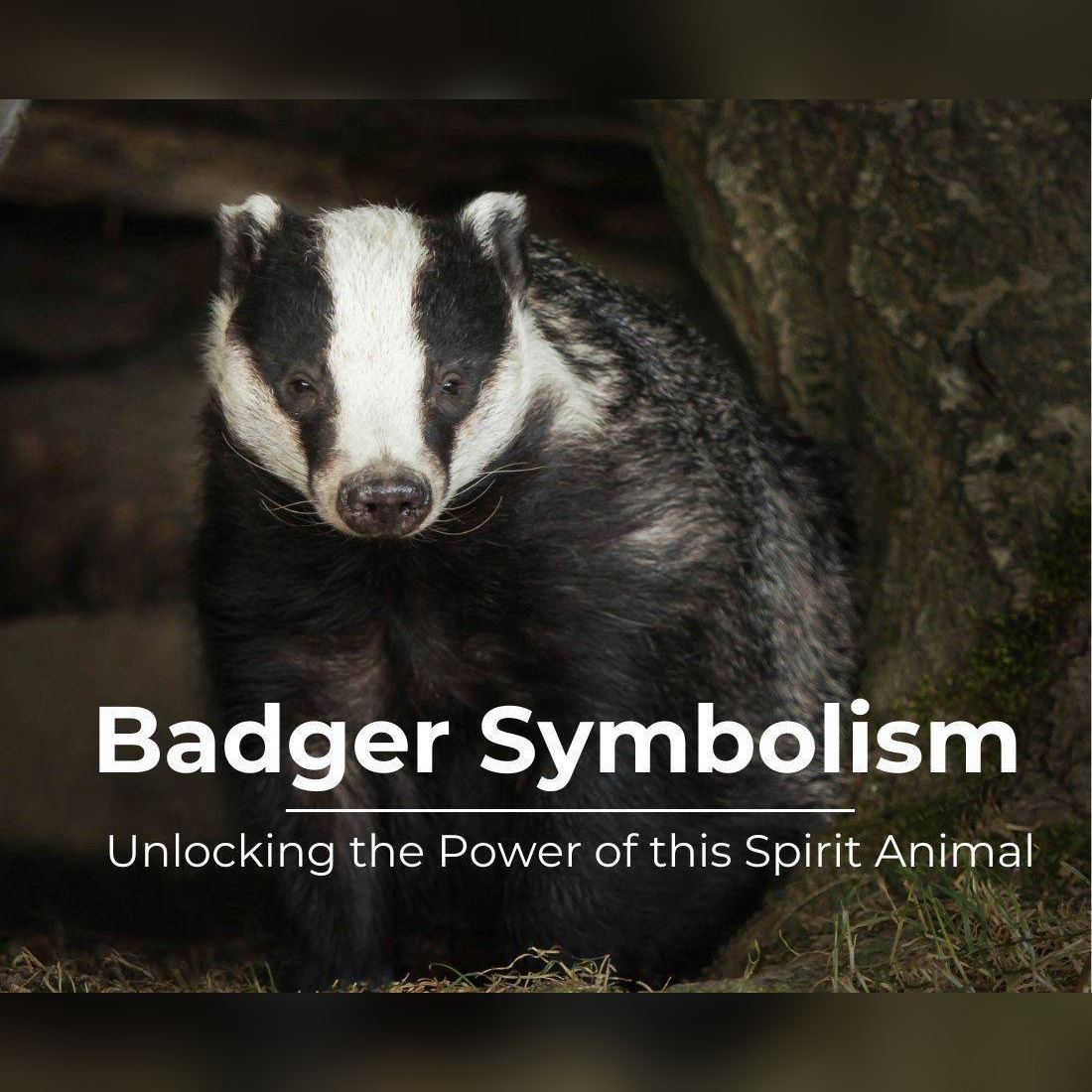
In Zuni ceremony, the badger is the red guardian of the south, one of six directional animal powers shaping how a people read the world. This role reveals the badger as more than a digger, it’s a force tied to real direction and spiritual work. Whether it speaks as a southern guard or something else depends on which tradition you inhabit.
Key Takeaways
- Badger symbolism is culture-specific. No single cross-cultural meaning holds across all traditions.
- Zuni ceremonialism documents the most detailed Indigenous badger symbolism: the badger is the red guardian of the south, tied to directional protection and healing, as recorded by Ruth Leah Bunzel in Zuni Ceremonialism (Bureau of American Ethnology, 1932).
- Much Japanese “badger” lore involves the raccoon dog (tanuki), not a true badger. Conflating the two creates real symbolic confusion.
- European traditions, German, Celtic, British, emphasize earth-dwelling, seasonal forecasting, and local naming rather than any unified spiritual doctrine.
- Modern spirit-animal and totem frameworks pull from these traditions selectively. They are interpretive tools, not historically fixed categories.
What Does the Badger Symbolize Across Cultures?
Protection and earth-power in Zuni Pueblo ceremonialism. Seasonal prediction in German-speaking rural tradition. Shape-shifting ambiguity in Japanese folklore. Those three meanings come from three separate communities watching three related but distinct animals, and they don’t add up to one universal symbol.
The package you find on most symbolism sites, persistence, boundaries, courage, healing, hidden truth, is a modern synthesis. Not wrong, exactly. But it flattens what is actually a varied and specific record into something that sounds more universal than the evidence supports.

Across traditions, the thread running through is not a single virtue. It is the earth itself: digging, hiding, defending a space underground, emerging at dusk. Every culture that built a symbolic framework around the badger started with those observed behaviors. Then each tradition interpreted them differently according to its own concerns.
What Do the Names “Badger,” “Brock,” and “Dachs” Reveal About the Animal’s Symbolic Identity?
The names people gave this animal encode its symbolic history more honestly than most modern meaning-lists do.
The English word badger first appears in the early sixteenth century. According to the Online Etymology Dictionary, it probably derives from badge plus an agentive suffix, meaning roughly “the badged one,” the creature identified by its stripe. A proposed French origin from becheur, “digger,” is less well supported. So the English name records the face first: the white blaze, the mark that makes the animal unmistakable. Marking before meaning.
The older English name was brock, still used in British rural speech. It connects through Irish broc and Welsh broch to reconstructed Proto-Celtic brokkos, probably meaning “grey.” A color reading rather than a behavioral one. The animal as a presence in grey earth.

German Dachs and Dutch das come from a separate Germanic root, reconstructed as thahsuz, possibly connected to an Indo-European root meaning “to construct.” The builder underground. That is a different emphasis entirely from the English stripe or the Celtic grey, and it shapes the symbolic territory the German-speaking world assigned to the animal: hidden labor, subterranean construction, the work that happens out of sight.
Three names. Three different first observations. The stripe, the color, the building. Each one pointing toward a different strand of what the badger has come to mean.
What Does Zuni Ceremonialism Say About the Badger’s Spiritual Power?
In Zuni ceremonialism, the badger is the red guardian of the south, one of six directional animal powers that organize Zuni religious space. This is not a vague cultural claim. It is a documented ceremonial institution.
Frank Hamilton Cushing recorded Zuni fetish traditions in the late nineteenth century, one of the earliest detailed Western accounts of the Zuni directional system. Ruth Leah Bunzel’s Zuni Ceremonialism, published by the Bureau of American Ethnology in 1932, extends and deepens that record. Badger fetishes functioned as protective and medicinal objects. The connection is specific: the badger’s ability to dig into the earth links it to subterranean power, and subterranean power connects to healing, to roots, to what lies beneath and sustains life above. The fetish was not decoration. It was a working object within a ceremonial system.

South is red, and south is the badger. That specificity is worth holding. It means the badger’s protective and healing associations in this tradition are directional and structured, not simply a general virtue attributed to a fierce animal.
One note, and I think it matters: this cannot be generalized. The Zuni A:shiwi tradition is not “Native American tradition” as a whole. Evidence from Zuni cannot be extended automatically to Lakota, Hopi, Apache, or neighboring Pueblo communities without separate documentation for each. What the badger means in other Indigenous traditions requires its own research.
How Does Japanese Folklore Portray the Badger, and Why Is the Tanuki Confusion Important?
Japanese badger symbolism is genuinely rich, but a lot of what circulates under that label is actually about the raccoon dog. The distinction matters more than it might seem.
Violet H. Harada’s 1976 article, “The Badger in Japanese Folklore” (Asian Folklore Studies, vol. 35), is the most rigorous English-language survey of this material. Harada identifies three recurring roles in Japanese narrative: the vengeful transformer, the grateful friend, and the roguish prankster. An animal wronged becomes dangerous. An animal helped returns the favor. An animal loose in the world plays tricks and gets into trouble. These are distinct story types, not a single symbolic identity.
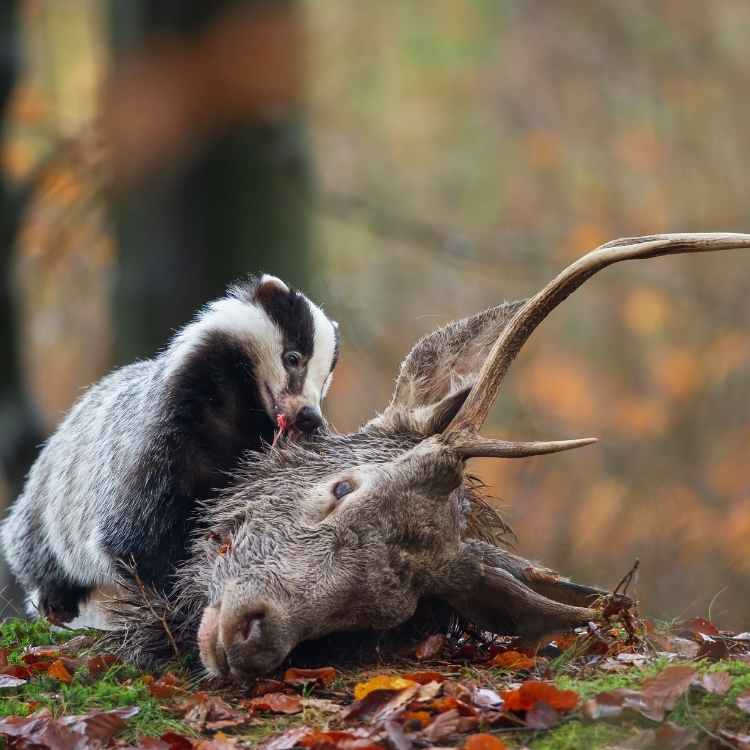
The complication is zoological. The Japanese word tanuki most often refers to the raccoon dog (Nyctereutes procyonoides), a canid, not a badger at all. The Japanese badger is Meles anakuma, sometimes called ana-guma or regionally referred to as mujina, a word that also gets applied to the raccoon dog depending on the province. So when a tale describes a shape-shifting, omen-bearing tanuki, it is usually a raccoon dog story. Importing it wholesale into a badger symbolism article is a category error.
That said, the folkloric figure, whatever its zoological identity, carries real symbolic weight. Transformation, trickery, the possibility that what you see is not what is there: those themes are consistent across the mujina and tanuki traditions. Where the Zuni badger is a stable directional guardian, the Japanese version is an unreliable shape-shifter. Same animal family, opposite symbolic pole.
What Did European Rural Traditions Believe About the Badger?
In German-speaking rural communities, the badger was a weather reader. Its emergence from the den in late winter was watched as evidence about how much cold remained, a tradition historically connected to the North American groundhog custom. That custom is a German immigrant transplant: the groundhog standing in for the badger that German settlers no longer had access to in Pennsylvania.Candlemas, February 2nd, is the relevantcalendar date in both traditions.
The symbolism here is practical and seasonal. The badger does not represent courage or healing in the German folk record so much as it represents the boundary between winter and spring, the question of when the earth will open again. The Eurasian badger is not a true hibernator, it enters reduced activity in winter but wakes periodically, so its emergence was observable in ways that a fully hibernating animal’s would not be.

Celtic and British traditions center on the animal’s older name. The broc or brock appears in rural speech, in place names (Brockenhurst, Broxbourne, dozens of others across England), and in folk descriptions of a formidable, earth-dwelling creature that should not be trifled with. Daniel Heath Justice, writing about the badger in literature and folklore, notes its consistent association with tenacity and underground knowledge in British and Irish contexts.
But I should be honest about what the evidence actually supports. Claims of a unified ancient Celtic spiritual doctrine for the badger, a coherent teaching, a medicine tradition, an underworld-guide function, are not well supported by surviving sources. What we have is regional naming, hunting records, and folk descriptions. Real, and worth knowing. Just not the same thing as a ceremonial system.
What Does Badger Behavior in the Wild Tell Us About Its Symbolic Associations?
The symbolism is not arbitrary. It maps directly onto observed behavior, and knowing the behavior helps explain why different communities landed on different meanings.
According to the Animal Diversity Web’s 2026 account of Meles meles, Eurasian badger social groups range from 2 to 23 individuals, usually adults and offspring, with young often remaining in the natal group across multiple seasons. First-year cub mortality runs between 50 and 65 percent. So: a highly social animal, family-structured, defending shared underground territory, but with enormous early mortality. An adult badger that survived its first year is genuinely tough. A first-year cub almost certainly did not make it. That combination, communal resilience alongside high vulnerability, explains why folklore can hold both readings: the defended sett as home and refuge, and the badger as an animal associated with loss and the underground world of the dead.

The American badger (Taxidea taxus) is more solitary than its Eurasian cousin, but its engineering is extraordinary. According to the U.S. Forest Service’s 2025 species review, American badger burrows reach approximately 10 meters in length and 3 meters in depth. Females excavate natal dens. Litters may be moved between multiple dens. A burrow that deep, constructed that deliberately, in which young are raised, that behavior almost writes its own symbolism. Earth power, hidden knowledge, defended space, the work that happens where no one can see it.
The earthworm doesn’t get this kind of treatment. The badger does, because its engineering is visible: the sett mound, the fresh-turned earth, the entrance worn smooth. And because the animal itself is both unmistakably marked and largely nocturnal. You see its face and its work. You rarely see the rest.
What Are the Most Common Misconceptions About Badger Symbolism?
Three specific misconceptions show up often enough to address directly.
Misconception one: the badger universally means persistence, boundaries, courage, healing, and hidden truth. This package gets presented as cross-cultural consensus on many symbolism sites. The record does not support it. Zuni badger symbolism is directional and ceremonial, not a general virtue-list. German folklore is about weather prediction and seasonal calendars. Japanese “badger” material often involves the raccoon dog and focuses on transformation and trickery. These three traditions share no common core that produces the standard five-virtue package. The package is a modern synthesis, and you deserve to know that.

Misconception two: tanuki stories are badger stories. The tanuki is almost always the raccoon dog, a canid with no close relation to the badger. The confusion is understandable, the Japanese badger and raccoon dog share habitat and overlap in regional naming, but it creates a category error when the shape-shifting, drumming-belly prankster of Japanese folklore gets assigned to “badger totem” lists.
Misconception three: “Native American badger medicine” is one shared tradition. It is not. Zuni ceremonialism has a specific, documented badger institution. Other Indigenous communities have their own relationships to the badger, which require their own documentation. Native Languages of the Americas documents badger figures across multiple distinct traditions, Ojibwe, Zuni, others, and the differences between those traditions matter as much as any surface similarities.
What Is the Badger as a Spirit Animal?
The spirit animal framework, as it operates in contemporary Western spirituality, is a modern comparative practice rather than a traditional institution. That is not a criticism. It is useful to know what you are working with.
Within that framework, the badger spirit animal is most often described as bringing tenacity, earth-rootedness, and boundary defense. Those qualities track back to real cultural sources: the Zuni badger’s role as guardian of directional space, the European badger’s defended sett and winter resilience, the behavioral fact of an animal that digs deep, stays put, and does not yield its ground easily.

If the badger has come to your attention and you are reading it as a spirit animal, here is what I would say: the qualities most consistently associated with it across the traditions that actually documented it are not about aggression. They are about staying where you belong, knowing what is yours, and working underground, in the dark, without audience, on the things that matter. That is a different emphasis than the “fearless fighter” reading that often dominates.
The badger tends to arrive symbolically when someone is being pushed to defend something important, or when the work that needs doing is the kind that nobody will see or praise. Earth-work. The unglamorous kind.
What Does It Mean to Have the Badger as a Totem Animal?
The totem concept in contemporary comparative spirituality refers to an animal that functions as a long-term guide or identifying symbol for a person or group, associated with particular qualities they are meant to embody. This is distinct from traditional totemic systems in specific cultures, which involve clan identity, ceremonial obligation, and inherited relationship, not personal choice.
For the badger as a totem in the contemporary sense, the qualities that appear most consistently are: defense of territory, family loyalty, earthbound persistence, and knowledge that comes from staying close to the ground. The Zuni directional framework supports the protection angle specifically. The denning behavior documented across both Eurasian and American badger species supports the family-loyalty and underground-knowledge readings.

The badger totem pole tradition is worth a brief note. Totem poles are a Northwest Coast and Alaskan Indigenous tradition, Tlingit, Haida, Tsimshian, and neighboring peoples, and specific family and clan animals appear on them according to lineage and story. I don’t have a confident answer about whether badger imagery appears in Northwest Coast carving traditions specifically, and I would not want to invent one. That question needs a more specific cultural source than I can point to.
What Does the Honey Badger Symbolize, and How Does It Differ from the Common Badger?
The honey badger (Mellivora capensis) is a separate species. Native to Africa, the Middle East, and South Asia, not closely related to the Eurasian badger or the American badger despite sharing a name. Same family, different genera.
The honey badger’s symbolic reputation rests almost entirely on documented behavior: it raids beehives despite the stings, takes on animals much larger than itself, and has been recorded surviving puff adder bites that would kill most other animals its size.
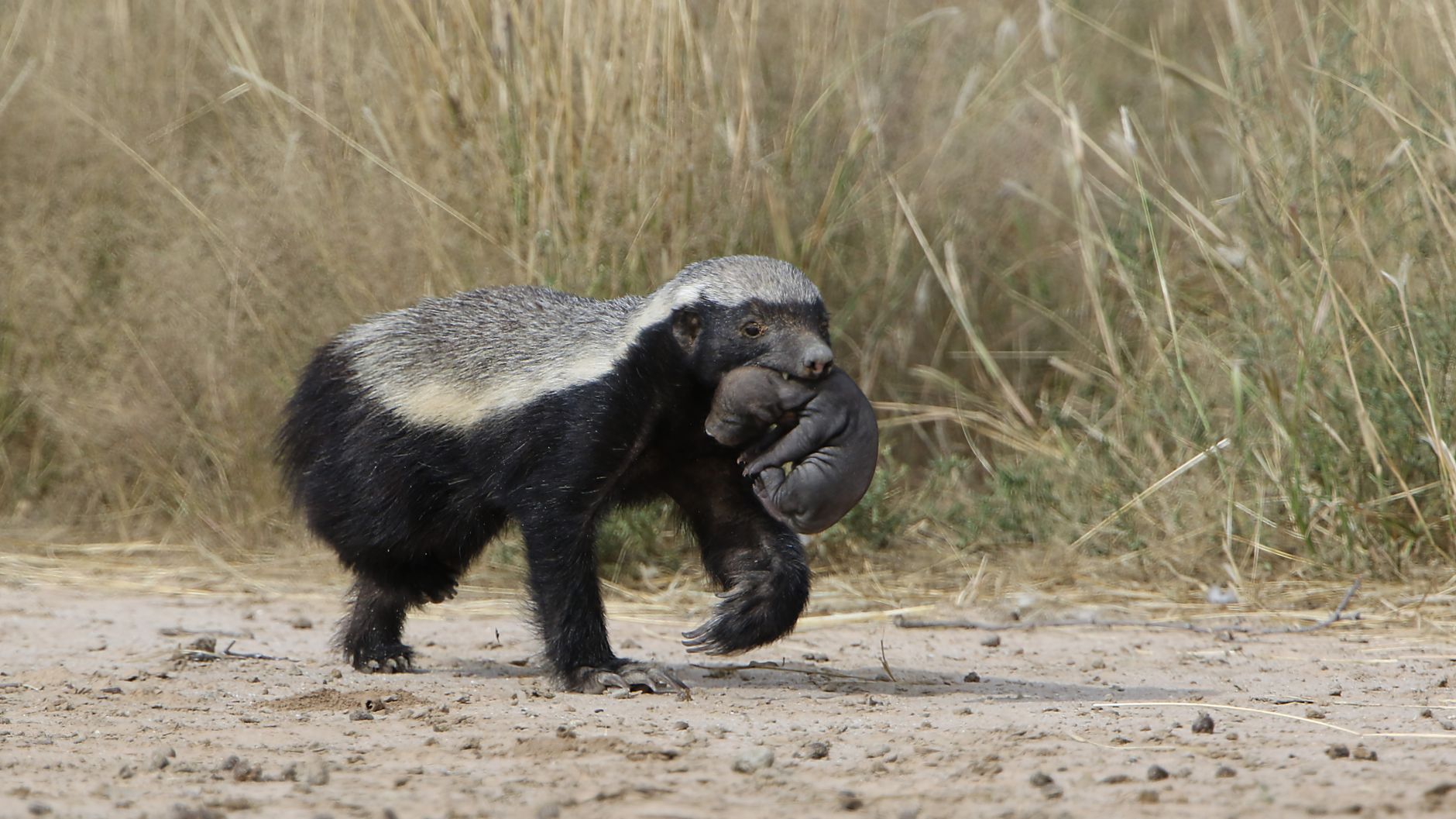
In the contemporary spirit animal and totem framework, the honey badger carries a different emphasis than the common badger: fearlessness over groundedness, relentless forward movement over defended territory, survival against unfavorable odds over quiet underground labor. The two animals attract different people for different reasons. That is probably appropriate, since they really are different animals with different behaviors.
Traditional symbolic systems specific to honey badger-range cultures, sub-Saharan African, South Asian, exist but are not well documented in the English-language sources available to me. The folk record in English on this particular question is thin, and I will not pad it.
What Does Dreaming of a Badger Mean?
Badger dreams most often get read around three themes: confronting something you have been avoiding, defending a space or relationship that is being encroached on, and digging toward something that is buried or not yet visible. Those readings map reasonably well onto the cultural traditions covered above.
From a Jungian angle, and I read Jung as psychology, not as metaphysics, the badger appearing in a dream often functions as a symbol of the shadow self doing necessary work underground. Not heroic work. Unglamorous, persistent, private work. If the badger in your dream is digging, that is usually read as moving toward something hidden, not away from something threatening.
From the Zuni ceremonial framework, the badger’s earth-power associations suggest a dream connection to healing, specifically the healing that comes from subterranean sources: roots, depth, what is below the surface of conscious awareness.

From the Japanese tradition, a badger or mujina in a dream carries the transformer note: things may not be what they appear. This is less common in Western dream interpretation of the badger specifically, but worth knowing if you are drawing on Japanese symbolic sources.
If the badger in the dream was attacking you, most interpretive frameworks read that as pressure you are putting on yourself, or that you are refusing to acknowledge, rather than an external threat. The badger attacks when cornered. A badger attacking in a dream often means something cornered is finally fighting back.
My grandmother Theresa’s leather notebook, which sits on my desk now, has an entry about badger dens as places where things are kept safe but eventually must come out. I have no scholarly citation for that. Just a German woman’s handwriting from sometime in the 1920s, and the sense that she was describing something real about what these animals do and what we see in them.
Frequently Asked Questions
Is the badger a good omen or a bad omen?
In most documented traditions, the badger is neither straightforwardly good nor bad. The Zuni badger is a guardian and healer. The European folk badger is a seasonal predictor. The Japanese figure leans toward trickery and transformation, which can go either way. Seeing a badger is more commonly read as a prompt to hold your ground or defend something important, not as a sign of bad things coming. A simple good/bad binary does not do justice to what the actual traditions say.
What does it mean when a badger crosses your path?
Path-crossing symbolism for the badger most commonly gets read as a prompt to hold your ground or examine what you are defending. The badger does not flee; it stands its territory. In British and Irish rural tradition, encountering a brock was often taken as an invitation to assess your own groundedness, what you are anchored to, and whether that anchor is worth keeping. I find this reading consistent with the animal’s actual behavior, which is more about maintaining position than moving aggressively forward.
What is the difference between a badger spirit animal and a badger totem?
In contemporary comparative spirituality, a spirit animal tends to refer to a temporary guide, an animal that appears at a specific life moment with a specific message. A totem animal is more like a long-term or inherited identifier, associated with a family or individual across time. The badger spirit animal is usually read as arriving when you need to defend something or dig toward something buried. The badger totem suggests a more permanent identification with earth-rootedness and defended space. These distinctions are modern and variable; different practitioners use the terms differently.
What does the badger represent in Lakota Sioux tradition?
The Zuni A:shiwi tradition is the most thoroughly documented. According to Ruth Leah Bunzel’s Zuni Ceremonialism (1932), the badger is the red guardian of the south, one of six directional animal powers. Badger fetishes were used as protective and medicinal objects, with the badger’s earth-digging connected to subterranean healing power. This is not a pan-Indigenous reading. Other nations have their own badger traditions, and they vary. The Native Languages of the Americas resource documents badger figures in Ojibwe and other traditions separately. Lumping them together misrepresents all of them.
Is the honey badger the same as a regular badger in spiritual traditions?
No, and the zoological difference matters. The honey badger (Mellivora capensis) is native to Africa, the Middle East, and South Asia, a different genus from both the Eurasian badger and the American badger. The Zuni directional guardian, the European weather-reader, and the British brock are all based on Eurasian or American badger behavior. The honey badger carries its own symbolic weight, fearlessness, relentless survival, drawn from its own documented behavior. Treat them separately.
What crystals or practices are associated with badger medicine in contemporary spirituality?
This is a modern framework with no grounding in the traditional sources discussed here. Contemporary practitioners who work with “badger medicine” sometimes pair it with grounding stones, smoky quartz, black tourmaline, jasper, on the basis that badger energy is earth-based and protective. That is an internally consistent contemporary practice. It does not reflect Zuni ceremonialism, Japanese folk tradition, or European folk belief, none of which associated badger symbolism with specific stones. Know which framework you are drawing from.
What does the badger symbolize in heraldry or European coat-of-arms traditions?
The badger appears in British and German heraldry, though less commonly than the lion, eagle, or bear. In heraldic tradition, it typically carried associations with tenacity, persistence, and earth-rootedness, consistent with its folk reputation as an animal that holds its ground and defends its territory. Scottish clan heraldry includes some badger imagery, tied to stubbornness in the positive sense: not yielding, staying put. The specific meanings vary by family and context, and I would not generalize beyond what individual sources document.
How is the badger used as a symbol in literature or popular culture?
The badger appears throughout British literature, most famously as the wise, reclusive, earth-dwelling figure in Kenneth Grahame’s The Wind in the Willows (1908). Grahame’s Badger is a guardian of old knowledge, living deep in the Wild Wood, respected but rarely seen. That literary archetype has influenced how the English-speaking world imagines badger symbolism at least as much as any folk tradition has.J.K. Rowling’s Hufflepuff house uses thebadger as its symbol, specifically for its associations with loyalty, hard work, and staying close to the earth. Literary constructions, but ones that draw on real folk associations and feed back into how people read real badger encounters.
What does it mean to dream of a badger attacking you?
Most interpretive frameworks read a badger attacking in a dream as something cornered that is finally fighting back. That something is often an aspect of yourself, a need, a boundary, an ignored problem, rather than an external threat. The badger attacks when it has no room left to retreat. A dream in which the badger is attacking you may be asking what you have been refusing to acknowledge until it had no choice but to demand attention. This is consistent with Jungian shadow-work interpretation and also with what the animal actually does when cornered.
Why do so many spiritual sites list the same badger meanings if they are not cross-cultural?
I think about this more than I should. The short answer: content aggregation. A site in 2005 assembled a list of badger virtues, persistence, boundaries, courage, healing, hidden truth, and subsequent sites copied and rearranged it without going back to primary sources. The five-virtue package spread because it is coherent and appealing, not because it reflects a cross-cultural consensus. The traditional sources, Bunzel on Zuni, Harada on Japanese folklore, the OED on etymology, tell a more varied and more interesting story. The uniformity you see is a sign of how the content was made, not of genuine cross-cultural agreement.
Sources
- Ruth Leah Bunzel, Zuni Ceremonialism, Bureau of American Ethnology, 1932
- Violet H. Harada, “The Badger in Japanese Folklore,” Asian Folklore Studies, vol. 35, 1976
- Online Etymology Dictionary, “badger”
- Animal Diversity Web, University of Michigan, Meles meles (Eurasian Badger), updated 2026
- U.S. Forest Service, Fire Effects Information System, Taxidea taxus, American Badger, 2025
- Native Languages of the Americas, Badger Legends and Mythology
- Wikipedia, Eurasian Badger (Meles meles)
- Wikipedia, Badger (overview)
- Daniel Heath Justice, Badgers in Literature
- Folklore Thursday, Badger Folklore
- Omniglot, Celtic Badger Names and Etymology
- Wikipedia, Zuni Fetishes
- www.timeanddate.com
- www.fws.gov
- www.britannica.com
- www.harrypotter.com