

The ibis symbolizes wisdom and divine record-keeping because ancient Egypt linked it to Thoth, god of writing and knowledge. Egyptologists like Martin Stadler traced this connection through temple texts and religious writings. However, most modern ibis meanings online ignore Egypt entirely, simply calling it a “wisdom bird” without credible sources.
Key Takeaways
- The ibis’s core symbolic meanings derive from ancient Egyptian religion, specifically from the god Thoth-Djehuty, as documented by Martin A. Stadler in the UCLA Encyclopedia of Egyptology (2012). They are not a universal cross-cultural consensus.
- Greek and Roman writers, Herodotus and Pliny the Elder, record a “serpent-slayer” and protective motif, not a personal-omen system for individual encounters.
- A 2019 PLOS ONE DNA study of 14 ancient ibis mummies found genetic diversity consistent with captured wild birds, not a closed breeding population, which changes what “sacred ibis farm” actually means.
- Modern spiritual readings of the ibis as threshold-crosser and divine messenger are reasonable analogical extensions of Thoth’s intermediary role, but they are not ancient definitions. They are contemporary interpretations built on documented roles.
- The African sacred ibis, American white ibis, and scarlet ibis carry distinct cultural histories. Collapsing them into one symbolic profile produces readings that don’t hold up against the actual record.
What Is the Ibis? Natural History, Species, and Why Behavior Matters for Symbolism
The African sacred ibis (Threskiornis aethiopicus) is a large wading bird: white-bodied, bare black head, long curved bill, found across sub-Saharan Africa and historically along the Nile. According to Animal Diversity Web’s 2026 species account, wild individuals can live up to roughly twenty years. That longevity, combined with the bird’s habit of returning to the same wetlands season after season, gave ancient observers something worth noticing: a creature that outlasted human generations and came back anyway.
The EBSCO Research Starters entry on the sacred ibis (2020) records that the species breeds in large, visible colonies, laying one to five eggs per clutch, incubating them for roughly 21 to 29 days. Thousands of birds nesting together near river banks, in plain view. You don’t develop a theology around a bird you can’t see.

The symbolism is not arbitrary. It maps onto what Egyptian priests and later Greek ethnographers were actually watching: a long-lived bird working at the boundary between land and water, returning on a predictable schedule, probing mud with a curved bill that looks, if you are inclined to see it, like a stylus. These are the raw materials. The rest is what careful observers built from them.
What Does the Ibis Symbolize Across Cultures?
Sacred knowledge, scribal authority, cosmic order, protection, divine record-keeping. Those are the meanings with documented roots. None of them originated as a generic “wisdom animal” concept that appeared independently across cultures that never met each other. Egypt is where the weight of this tradition lives, and that needs saying plainly.
What’s striking about ibis symbolism is not how consistent it is across cultures. It isn’t, particularly. What’s striking is how concentrated it is. One civilization, over three thousand years, built a symbolic system dense enough that it passed into Greek, then Latin, then medieval European learned literature, and is still generating interpretations today. That kind of staying power usually means something real was being observed.

I write a lot about birds here, and I try to say plainly which meanings have documented roots and which ones were assembled more recently by people working from general principles rather than primary sources. The ibis is one of the clearest cases I know where that distinction actually matters.
What Did Ancient Egyptian Religion Teach About the Ibis?
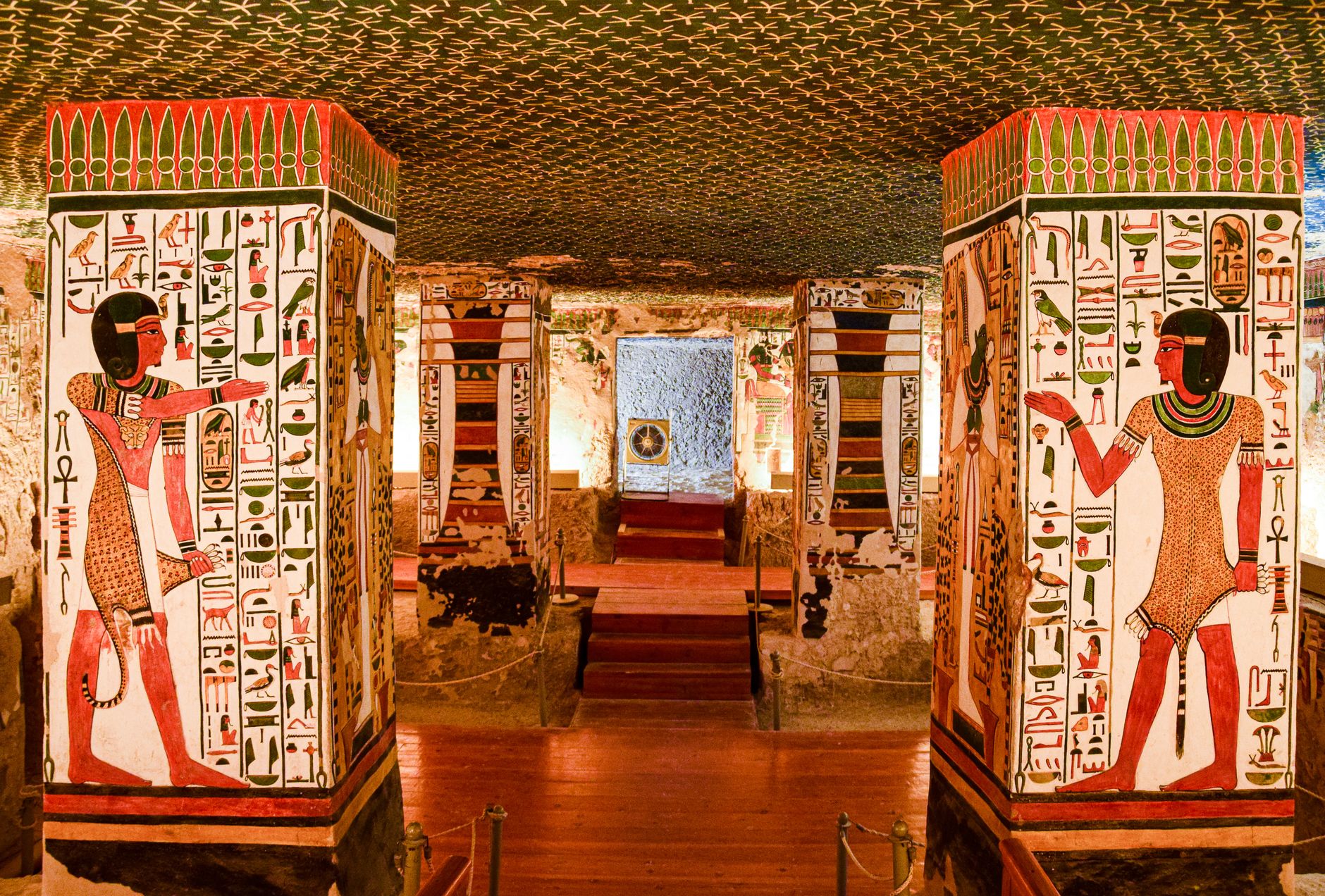
Start with Thoth-Djehuty. According to Martin A. Stadler’s entry “Thoth” in the UCLA Encyclopedia of Egyptology (2012), Thoth was the god of writing, knowledge, measurement, magic, lunar time, and the recording of divine judgment. Egyptian religious art represented him either as an ibis or as a human figure with an ibis head, the two forms appearing interchangeably from the Old Kingdom onward, through the Pyramid Texts and Coffin Texts and into the Book of the Dead.
Thoth’s role in divine judgment is specific. In the weighing-of-the-heart scene, he stands with a stylus and records the verdict. He does not weigh the heart himself; he writes down what the scales show. His ibis form is associated with accuracy, witness, and permanent record, not mercy or condemnation, but the act of getting it right and writing it down. That’s a narrower claim than “wisdom,” and a more interesting one.

The temple ibis cults were substantial. Worshippers purchased ibis mummies as votive offerings at temples dedicated to Thoth. The catacombs at Saqqara and Tuna el-Gebel held mummified ibises by the hundreds of thousands. Stadler’s documentation shows this was not a fringe practice but a mainstream one, woven through Egyptian religious life from at least the Third Dynasty. Three thousand years is a long time to take a bird seriously.
What Did Greek and Roman Writers Say About the Ibis?
Herodotus, writing in his Histories Book 2 around 440 BCE, recorded Egyptian explanations for the reverence given to the ibis. The Egyptians he spoke with said that ibises gathered near the town of Buto and killed winged serpents coming from Arabia. The serpents never reached Egypt. The ibis was therefore a protector of the land. Herodotus’s account is ethnography. He is writing down what Egyptians told him, not endorsing the claim. The “serpent-slayer” motif is a documented Egyptian explanation of their own practice, filtered through a Greek observer. It is not evidence that every ancient Mediterranean society saw the ibis this way.

Pliny the Elder’s Natural History, Book 10, written around 77 CE, references Egyptian invocations of the ibis against serpents and pestilential flies. In Roman-period worship of Isis, whose cult spread from Egypt into Rome and across the empire, the ibis could appear as an associated emblem of Egyptian sacred antiquity. But the Roman evidence supports associations with protection and ritual power, not, as some modern meaning sites claim, with career success or personal manifestation. That reading has no classical source I have found.
What Do the Ibis Mummies Reveal About Sacred Practice in Ancient Egypt?
In 2019, Sally Wasef and colleagues published a mitogenomic study in PLOS ONE analyzing the DNA from 14 ancient ibis mummies, comparing their genetic profiles with those of modern African sacred ibis populations. The findings, covered by Science Daily, showed high genetic diversity among the mummified birds, the kind of diversity you expect in a wild-caught population, not in a closed breeding colony maintained over generations.
What this tells us is that priests probably captured and temporarily kept wild birds rather than running a controlled, self-sustaining breeding operation. The scale was still extraordinary: hundreds of thousands of mummified birds across multiple sites represent organized collection, care, ritual slaughter, and mummification sustained over centuries. But the production model was more like seasonal capture than domestic farming.
The symbolic implication matters. The Egyptians kept returning to wild birds. Every mummy represented a wild creature brought temporarily into sacred space. That is a different kind of relationship than husbandry, and it changes what “sacred” means in this context.
What Is the Ibis’s Spiritual Meaning in Modern Interpretation?
Modern spiritual frameworks tend to read the ibis through Thoth’s documented roles and extend them by analogy. Thoth as intermediary becomes the ibis as a symbol of divine communication. Thoth as lunar timekeeper becomes the ibis as a symbol of cycles and patient timing. Thoth as recorder of judgment becomes the ibis as a symbol of honesty, precision, and witnessing your own life clearly.
These are reasonable extensions. I don’t object to analogy when the source is named. The problem is when analogy gets presented as ancient definition: “the ibis has always symbolized divine messages.” That skips the actual history and replaces it with a modern framework dressed in ancient clothes.

Where modern interpretation adds something the Egyptian record doesn’t quite cover is in the idea of threshold-crossing: moving between states of knowing and not knowing, or between different kinds of time. The ibis’s wetland behavior gives that reading a biological anchor. Working at the edge between land and water, arriving seasonally, returning reliably. It’s not a fabrication. But it is a contemporary translation, not a recovered ancient definition. Worth holding that distinction.
What Does the Ibis Mean as a Spirit Animal or Totem?
If the ibis functions as a personal archetype for you, the Thoth-derived record points toward specific qualities: intellectual discipline, patient and precise observation, working at the edge between what is known and what isn’t, and the care to record what you find accurately. These are not general “wisdom” traits. They are the traits of someone who sits still long enough to see clearly, then writes it down correctly.
The ibis as totem also carries the colonial-nesting quality: a creature that works alongside large groups but uses a long curved tool to do individual, careful, probing work. Someone drawn to this archetype often combines a public-facing or community-embedded life with private, methodical thinking. That’s a useful frame even for a reader who doesn’t take totemic practice literally.

The common thread across traditions is the combination of learning and recording. Making knowledge permanent, rather than fleeting. The ibis doesn’t just know things; in the Egyptian framework, it keeps the account.
What Does Dreaming of an Ibis Mean?
Dream readings for the ibis track reasonably well with the established symbolic vocabulary. An ibis in flight tends to be read through Thoth’s intermediary role: something moving between two states, two periods of life, or two kinds of knowledge. An ibis standing in shallow water, which is the bird’s natural posture, reads as patient waiting, working at a boundary, attending carefully before moving.
An ibis-headed figure in a dream is more specifically Egyptian in register. That image pulls toward themes of judgment, record, and accountability: who is keeping the account of your life, and how accurate is it.
A dead ibis in a dream is harder. I don’t have a confident reading from any single tradition; the folk record on ibis dream death imagery is thin, and I’d rather say so than invent one. For a fuller treatment of ibis dream and encounter scenarios, see our companion piece on dead ibis meaning.
What Symbolic Differences Exist Between the White Ibis, Scarlet Ibis, and Sacred Ibis?
Three distinct species with distinct cultural histories. Collapsing them into a single symbolic profile is one of the more common errors in ibis symbolism writing, and it’s worth correcting directly.
The African sacred ibis (Threskiornis aethiopicus) is the one with the documented Egyptian and classical connection to Thoth. White body, black bare head. This is the species in the catacombs at Saqqara.
The American white ibis (Eudocimus albus) is native to the southeastern United States, Central America, and northern South America. It has no documented ancient Egyptian connection, because it does not live in Egypt. Southeastern Native American traditions hold their own readings of this species, but those traditions have not, to my knowledge, been systematically documented in primary sources I can verify. I will not reconstruct them from secondary internet sources.
The scarlet ibis (Eudocimus ruber) is native to South America and the southern Caribbean. Its extraordinary red-orange color comes from the crustaceans it eats.Trinidad named it a national birdin 1962. In South American and Caribbean traditions where the bird carries cultural weight, color symbolism tends to be the primary interpretive frame: fire, vitality, the intensity of tropical life. The Egyptian sacred-ibis symbolism does not apply here. Different bird, different part of the world, different history.
What Misconceptions Surround Ibis Symbolism and What Does the Evidence Actually Show?
Three misconceptions come up often enough to name directly.
The first is that the ibis universally represents wisdom, manifestation, and spiritual awakening. The historical record is narrower than that. Stadler’s 2012 documentation shows the meanings attested in primary sources come from one religion in one region over a defined historical period. “Wisdom” in the broad modern sense is a flattening of something more specific.
The second is that seeing an ibis is automatically a death omen or a message from a deceased person. The Egyptian evidence shows funerary and votive use, yes. But a temple offering is not the same as a sighting omen. The ibis’s connection with the dead comes through Thoth’s role as recorder of divine judgment, not through any documented rule that a living ibis crossing your path predicts mortality.
The third is the “sacred bird farm” idea: that Egyptians maintained closed, industrial-scale breeding operations to supply ibis mummies. The 2019 Wasef et al. DNA study, as reported in the New York Times, found genetic diversity inconsistent with a closed breeding population. Repeated capture of wild birds, probably seasonal. The scale was still extraordinary. But the biology does not match the simple factory narrative.
What Did Medieval and Later European Traditions Make of the Ibis?
The ibis entered Christian and European learned literature through biblical and classical channels, not through an independent European folk tradition. Medieval bestiaries occasionally included the ibis, drawing on Latin natural history rather than direct observation. Most medieval European writers had never seen a live ibis. The bird was a textual object, passed from one manuscript to the next.
The responsible reading, as Mark Cocker and Richard Elphick note in The Bird Name Book (2025 edition), is that later European references to the ibis preserve classical Egyptian and Latin natural history. They are not evidence of a widespread vernacular ibis cult in fourteenth-century England. The word was there; the bird was not. What survived was a textual tradition carried through scribal and learned channels, which is itself a kind of Thothian irony, and one I find genuinely pleasing.
What Is the Etymology of “Ibis” and What Does the Word’s History Reveal?
English ibis came through Latin ibis, borrowed from Ancient Greek ἶβις. Greek and Latin almost certainly took the word from an Egyptian source, conventionally transliterated as hbj. This transmission is supported by H. H. D. Liddell and Robert Scott’s A Greek-English Lexicon (1940) and by Cocker and Elphick’s Bird Name Book, which places the English entry in the 1300s.
The word’s path through history mirrors the bird’s symbolic history. From a sacred Egyptian context into Greek ethnographic writing, then into Latin encyclopedic and religious text, then into medieval European learned literature. At each stage carried by scribes and scholars, exactly the class of people Thoth governed.
My grandmother Theresa kept a leather notebook of Bavarian folk animal stories, and the ibis does not appear in it. The bird never lived in Bavaria. But the way that notebook traveled, from a village in the Bayerischer Wald to Wisconsin to a cabin desk in Black Mountain, is not entirely unlike the way the word ibis moved. Some things survive because someone decided they were worth writing down.
Frequently Asked Questions
Is the ibis a good omen?
In the traditions where the ibis carries symbolic weight, Egyptian religion and classical ethnography, the bird is associated with sacred protection, divine knowledge, and cosmic order. That’s broadly positive. The Greek reading documented by Herodotus in Histories Book 2 presents the ibis as a defender against harmful forces. There is no strong primary-source tradition casting the ibis as a bad omen in ordinary encounters. Modern negative readings usually derive from the bird’s association with death through Thoth’s judgment role, which is a misreading of what that role actually involved.
Why was the ibis sacred in Egypt?
The African sacred ibis was the earthly form of Thoth-Djehuty, the god of writing, measurement, lunar time, magic, and divine record-keeping. According to Martin A. Stadler’s “Thoth” in the UCLA Encyclopedia of Egyptology (2012), Thoth’s ibis form appears across the Pyramid Texts, Coffin Texts, and Book of the Dead. The bird was sacred not because it was rare or beautiful but because it embodied a specific divine function: the recording of truth and the maintenance of cosmic order. That is a theological claim with a three-thousand-year paper trail.
What does it mean when an ibis crosses your path?
There is no ancient documented rule that a living ibis crossing your path carries a specific personal omen. I want to be direct about that. What modern spiritual frameworks tend to say, drawing reasonably from Thoth’s role, is that an ibis sighting invites attention to knowledge you have been ignoring, to the accuracy of how you record your own experience, or to a boundary you are crossing between two ways of living. Those readings have a logical basis in the documented symbolism. But they are contemporary interpretations, not recovered ancient definitions.
What is the difference between ibis symbolism and Thoth symbolism?
In practice, for the African sacred ibis, they are the same tradition approached from two directions. Thoth’s symbolic register, writing, knowledge, measurement, lunar cycles, divine judgment, is the source from which ibis symbolism derives. The ibis is one of Thoth’s physical forms, not an independent symbol that later got associated with a god. This means ibis symbolism is as specific and grounded as Thoth symbolism: not generic “wisdom,” but the particular discipline of accurate knowledge-keeping and honest record-making.
What does a white ibis symbolize specifically?
The American white ibis (Eudocimus albus) lives in the southeastern United States and has no documented ancient Egyptian connection. Its symbolic associations in that region are less extensively recorded in primary sources available to me. White coloring in general bird symbolism tends to carry readings of clarity, purity, and new beginnings across multiple folk traditions, and I suspect that register applies here. But I won’t manufacture a specific traditional citation I haven’t verified. If this species caught your attention, the color symbolism is the stronger thread to follow than the Egyptian one.
What does a scarlet ibis symbolize?
The scarlet ibis (Eudocimus ruber) is native to South America and the southern Caribbean, and its extraordinary red-orange color comes from the crustaceans it eats. Trinidad declared it a national bird in 1962. In South American and Caribbean traditions where the bird carries cultural weight, color symbolism tends to be the primary interpretive frame: fire, vitality, intensity. The Egyptian sacred-ibis symbolism does not apply here. These are different birds from different parts of the world with different cultural histories.
Is the ibis associated with death?
Yes, but the connection is specific. Thoth’s role in the afterlife, as documented in the Book of the Dead, is as recorder of divine judgment: he writes down the verdict after the weighing of the heart. His ibis form is present in funerary contexts, and ibis mummies were used as votive offerings at temples associated with death and the afterlife. But the association is with truthful record-keeping in the face of death, not with predicting death. The ibis in this frame is less “death omen” and more “honest witness.”
What does the ibis represent in terms of the moon?
Thoth was a lunar deity, governing the measurement of time through the moon’s cycles. According to Stadler’s UCLA Encyclopedia entry, this lunar function was one of Thoth’s primary roles, tied to his function as keeper of cosmic order. The ibis, as Thoth’s earthly form, inherits this association. In modern spiritual reading, this tends to translate into themes of cyclical patience: knowing that things return, that timing matters, that some knowledge comes in phases rather than all at once. A reasonable contemporary extension of a well-documented ancient role.
Can the ibis be a negative symbol?
In the documented primary traditions, not straightforwardly. The Egyptian record shows the ibis associated with divine order, protection, and sacred knowledge. Thoth’s judgment role could be considered sobering, in that it involves honest accounting. But honest accounting is not negative in Egyptian religious thought; it is the basis of cosmic order. The ibis becomes a negative symbol mainly when modern interpreters focus on the death-and-judgment association while stripping away the context. Without context, “the one who writes down what the scales show” sounds ominous. Within it, it sounds like integrity.
How many ibis mummies were found in Egypt and what do they tell us?
The number runs into the hundreds of thousands across multiple sites, with the catacombs at Saqqara and Tuna el-Gebel being the largest repositories. The 2019 PLOS ONE study by Wasef et al. analyzed 14 ancient mummies using mitogenomic DNA analysis. The genetic diversity found suggests the birds were captured from wild populations repeatedly rather than bred in closed colonies. The scale of the cult was immense, mainstream religious practice sustained over centuries, but the production model was more ecologically dynamic than popular accounts suggest. Wild birds, caught seasonally, brought temporarily into sacred space, then mummified as offerings. That relationship with a wild creature carries its own symbolic weight.
Sources
- Martin A. Stadler, “Thoth,” UCLA Encyclopedia of Egyptology, 2012
- Herodotus, Histories, Book 2, c. 440 BCE (Swayne translation, Wikisource)
- Pliny the Elder, Natural History, Book 10, c. 77 CE
- Sally Wasef et al., “Mitogenomic Diversity in Sacred Ibis Mummies Sheds Light on Early Egyptian Practices,” PLOS ONE, 2019 (via Science Daily)
- Wasef et al. 2019 coverage, New York Times, November 2019
- Ancient Greek ibis entry, Wiktionary (drawing on Liddell and Scott)
- Animal Diversity Web, “Threskiornis aethiopicus” species account, 2026
- EBSCO Research Starters, “Sacred Ibis,” 2020
- Wikipedia, “Ibis”, general species overview
- JSTOR, related Egyptological scholarship
- laws.gov.tt



I live in sw FL and love the Ibis. I want to help save them.
Absolutely love your passion for the Ibis, especially in southwest Florida! These birds are more than just creatures; they’re symbols of wisdom, spirituality, and protection, deeply rooted in cultures from ancient Egypt to Native American traditions. If you’re keen on helping them out, maybe look into local conservation groups or even just chat with your neighbors about the importance of these birds. Every little bit helps, and your enthusiasm can inspire others too. Keep spreading the love for the Ibis! ?️
Regarding organizations GPT says:
I’m also in SW Florida. A white ibis just flew into the yard and walked up to my hammock. It walked around me on for a couple minutes coming right up into my personal space. I let it do its thing and after a few minutes it wondered off and flew away
Chris, that’s such a magical encounter! In many cultures, the white ibis is seen as a symbol of communication and curiosity. Its visit might be a reminder to stay open to the messages around you, both from nature and in your personal life. It’s wonderful you let it explore your space; such moments can feel like a gentle nudge from the universe to pay attention to the little wonders in our lives. Who knows what insights or inspiration the ibis brought you during its brief visit!