
The first owl I ever handled was a Saw-whet in December 2012, three weeks after moving to Black Mountain. She sat on my porch unable to fly. I carried her to the wildlife center in a cardboard box, beginning years of Saturdays with injured raptors. What an owl sighting means depends on which tradition you bring to it and what happened.
Key Takeaways
- Owl meaning is not universal. What a sighting means depends almost entirely on which tradition you consult, and several contradict each other directly.
- Cherokee and some Plains traditions read owls as warning figures tied to dangerous knowledge; the Lenape tradition sees an owl dream as the designation of a personal guardian. These are not the same thing.
- The “wise owl” idea is a Greek-Athenian cultural export. It describes Athena’s strategic intelligence, not owl cognition. Owls are specialized hunters, not philosophers.
- Behavioral facts, including year-round territory fidelity, conspicuous nocturnal calls, lifelong pair bonds, and lifespans exceeding twenty years, give the owl legitimate reasons to attract symbolic attention. The projection is not random.
- Daytime sightings and hearing a call without seeing the bird carry different symbolic registers across traditions. They are not interchangeable with a nighttime visual encounter.
What Does It Mean When You See an Owl?
The short answer: it depends on which tradition you bring to the encounter, and on what exactly happened. Daytime or night? Did the bird hold still and look at you? Did you hear it before you saw it, or not see it at all? These details matter, and different traditions weight them differently.
Across the documented record, Cherokee oral accounts, Lakota vision frameworks, Lenape dream tradition, classical Greek iconography, and Appalachian folk belief, the owl accumulates four broad symbolic roles: warner, guardian, messenger, and marker of hidden knowledge. No single role wins across all traditions. The death-omen reading that circulates on most spiritual websites is real, but it represents one strand, not the whole cord.
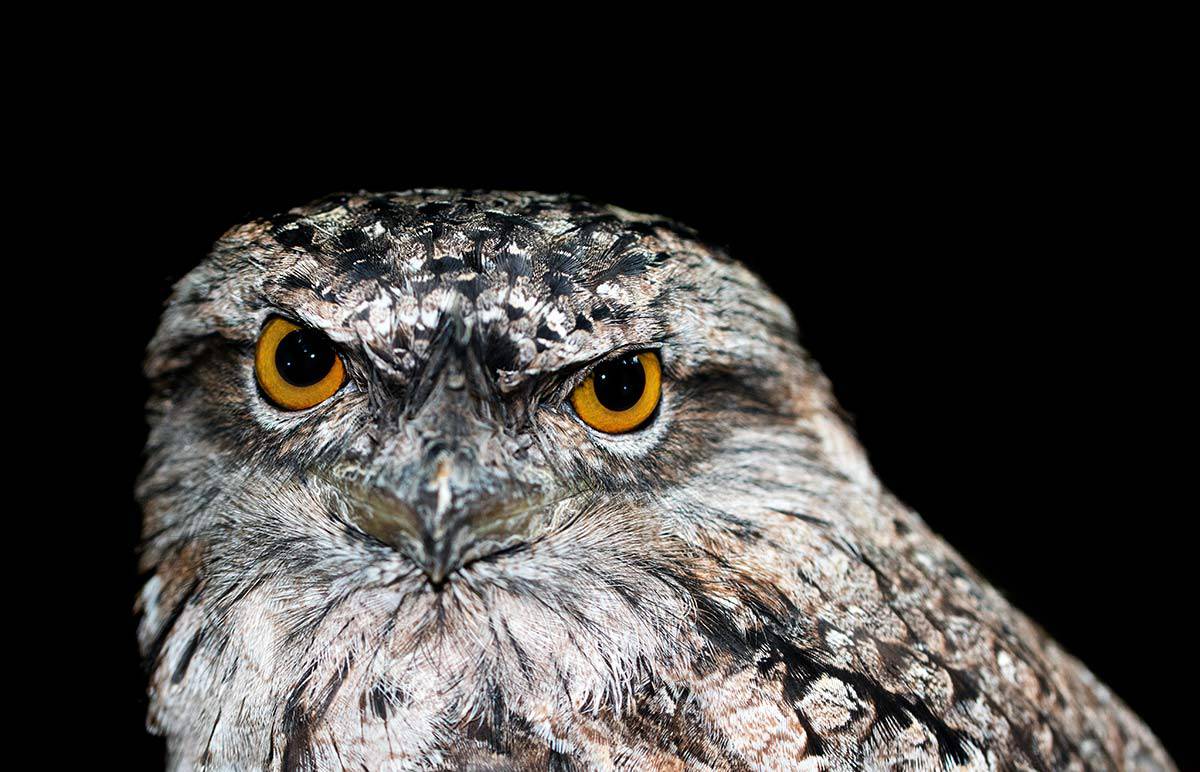
I’ve been working with raptors at a local wildlife center for years, and I want to say something plainly before we go further: the owl that looked at you from a fence post was almost certainly doing what owls do. Watching for prey, holding a perch, resting during a dispersal flight. Knowing that doesn’t cancel the other question. The need to find meaning in that gaze is older than any of us, and it has produced some genuinely interesting thinking across cultures. Both things are true at once.
What Is the Core Spiritual Meaning of Owls Across Traditions?
Four symbolic threads appear again and again, in traditions that had no contact with one another. That convergence is worth paying attention to. Not because it proves anything supernatural, but because it tells you something about what the owl actually does, and why the human mind keeps reaching for it.
Warning and threshold-crossing. The owl is a night animal encountered in daylight, a silent creature that suddenly calls. In Cherokee oral tradition documented by James Mooney in Myths of the Cherokee (Bureau of American Ethnology, 1900), owls appear at the boundaries of ordinary life: near illness, near punishment, near events about to break through from somewhere else. The threshold quality is built into the biology. An owl sitting on your fence in broad afternoon has crossed from its domain into yours, and that crossing is what traditions respond to.
Guardianship and long-term presence. In Lenape belief as recorded by Frank Speck in The Delaware Indians (1931), dreaming of an owl can designate it as a personal guardian spirit. The Barred Owl, which holds a territory for its entire adult life and often lives alongside the same human community for a decade or more, fits this role better than almost any other bird. It’s not visiting. It’s been there the whole time.
Hidden knowledge and seeing what others can’t. The Greek projection, the owl of Athena, the bird of metis, runs through Western symbolism from fifth-century BCE Athenian coinage straight into contemporary culture. Boria Sax traces this in The Mythical Zoo (ABC-CLIO, 2001): the forward-facing eyes, the still posture, the ability to hunt in total darkness became, in Greek hands, a symbol for strategic intelligence. That image got exported to every European colony, including the American ones, and it still shapes how most people interpret owl encounters today.
Messenger from another register. According to the Buffalo Bill Center of the West’s 2018 ethnographic summary “Native Americans and Owls,” several Plains and Southeastern tribes understood owl calls as transmissions of news: events happening far away, things about to change, conditions in the spirit world bleeding through into ordinary hearing. This is the framework that produces the “death omen” reading, but it’s broader than that. News of distant events is not always bad news.
What Does the Owl’s Name and Scientific Classification Reveal About Its Symbolism?
The Barred Owl’s scientific name is Strix varia. Both words carry history that shaped how people interpreted the bird before they’d ever seen one.
Strix is Latin borrowed from Greek stríx, a night creature described in Roman literature as blood-sucking and malign. Ovid, in Fasti 6, describes the striges as birds that tear at infants in their cradles. Witch-birds, shape-shifting and hungry. That association was active in European folk consciousness for centuries and colored colonial readings of every large owl settlers encountered in North America. When English and German settlers heard a Barred Owl calling from the woods at night, they brought that loaded word with them.
The species epithet varia just means “variegated,” referring to the barring and streaking on the feathers. But the genus name did real cultural work. The strix tradition fed directly into the European witch-and-owl complex, which then crossed the Atlantic and layered onto whatever Indigenous readings of owls were already present in the southeastern forests where the Barred Owl is most common.
The English word “owl” comes from Old English ule, probably imitative of the call. Nothing dark there. But in the Ozarks and Appalachia, as documented in Vance Randolph’s Ozark Magic and Folklore (Columbia University Press, 1947), the Barred Owl was known as the “rain owl” and the “hoot owl,” its calls read as weather signs or misfortune warnings. The folk names tell you what local people were listening for. They were listening for information, not beauty.
What Do Cherokee Traditions Say About the Owl’s Spiritual Role?
In Cherokee oral tradition, owls are not simple omens. They occupy a position that takes some care to describe accurately, because it’s easy to flatten into “death bird” and stop there. The actual record is more specific.
According to the Buffalo Bill Center of the West’s summary of Cherokee belief, certain owls, the Eastern Screech Owl and Great Horned Owl appear most often in the documented record, were understood as spiritual consultants, accessible to medicine specialists who could interpret their calls. An owl calling near a house could signal illness approaching or news from a distance. The bird occupied a zone between the visible world and what lay behind it.
James Mooney’s Myths of the Cherokee records the owl’s association with night-witches, figures in Cherokee spiritual life who operated after dark and used animal forms or companions. This is not the same as saying owls were evil. It’s saying they had access to registers of power that required careful handling. The specialist who could work with an owl’s knowledge was in possession of something real and consequential.
I want to be direct here: I am not Cherokee, and I didn’t grow up inside this tradition. I’m drawing on Mooney’s ethnographic record, which itself has limits and a colonial context that scholars have written about at length. What I can say is that the Cherokee framework treats the owl as something with genuine spiritual weight, not a metaphor, not a projected emotion, but an entity in a specific relationship with human life. That’s more demanding than the generic “wisdom symbol” that circulates in most Western spiritual content.
What Do Lakota and Lenape Traditions Say About Owl Encounters?
The “owl equals death omen” claim that appears on most spiritual websites would surprise a Lenape reader. It would also complicate things for a Lakota warrior tradition in which owl feathers and owl dreams carried protective rather than fatal significance.
James R. Walker’s Lakota Belief and Ritual, edited by DeMallie and Jahner (University of Nebraska Press, 1980), documents owl figures appearing in Lakota vision experiences as wakhàn, sacred beings with power. For several bands, owls could warn of approaching danger, which is not the same as causing it. A warrior who dreamed of an owl might receive protection: the night sight, the ability to see hidden threats, the capacity to move without detection. The owl as sentinel and ally, not harbinger.
Frank Speck’s The Delaware Indians (1931) offers the Lenape framework, which is different again. Here the operative mechanism is the dream: an owl that appears in a dream may be designating itself as a personal guardian spirit for the dreamer. The Barred Owl, with its year-round territory fidelity and long lifespan, is exactly the kind of creature that could serve this role in the forest environments where Lenape communities lived. It’s there, every year, in the same trees. It knows the territory better than you do.
Across these two traditions, the owl carries protective potential. That is a fundamentally different symbolic register from the European strix tradition, even when both use the word “omen.”
What Did Ancient Greek Culture Say About Owl Symbolism?
The owl most Greeks had in mind was the Little Owl (Athene noctua), a small, forward-staring bird common in the olive groves around Athens. It was Athena’s bird, appearing on Athenian coins from the late sixth century BCE onward, and in Aristophanes’ comedy Birds (414 BCE) the owl’s presence among the birds carries the authority of the city itself.
What Athena represented was metis: cunning intelligence, strategic thinking, the ability to see clearly what others miss. The owl, with its still posture and fixed forward gaze, became the visible emblem of that quality. Not wisdom in the sense of accumulated experience, but the sharper thing: seeing the situation for what it actually is.
Boria Sax, in The Mythical Zoo (2001), traces how this Athenian template became the dominant European image of all owls, eventually crossing the Atlantic with colonial settlement. When English and German settlers in North America encountered the Barred Owl and the Great Horned Owl, they had already been taught, through centuries of literature and iconography, that owls meant knowledge. That prior image is the main reason spiritual websites still describe the Barred Owl as a “wisdom symbol” today. It’s an import. A real one, with deep roots, but an import.
What Role Did the Owl Play in African American Historical Memory?
This is the reading of the Barred Owl I find most specific, and it’s almost never mentioned in spiritual meaning content.
The National Audubon Society documents a strong oral tradition that Harriet Tubman used the Barred Owl’s call as a coded signal on the Underground Railroad. The bird’s distinctive vocalization, “who cooks for you, who cooks for you all?”, was apparently used in different variations to tell freedom-seekers whether it was safe to move or necessary to hold still. The Barred Owl, whose call is loud, carries far through the night woods, and is not the kind of sound that alarms a listener unfamiliar with forest birds, was a near-perfect medium for that communication.
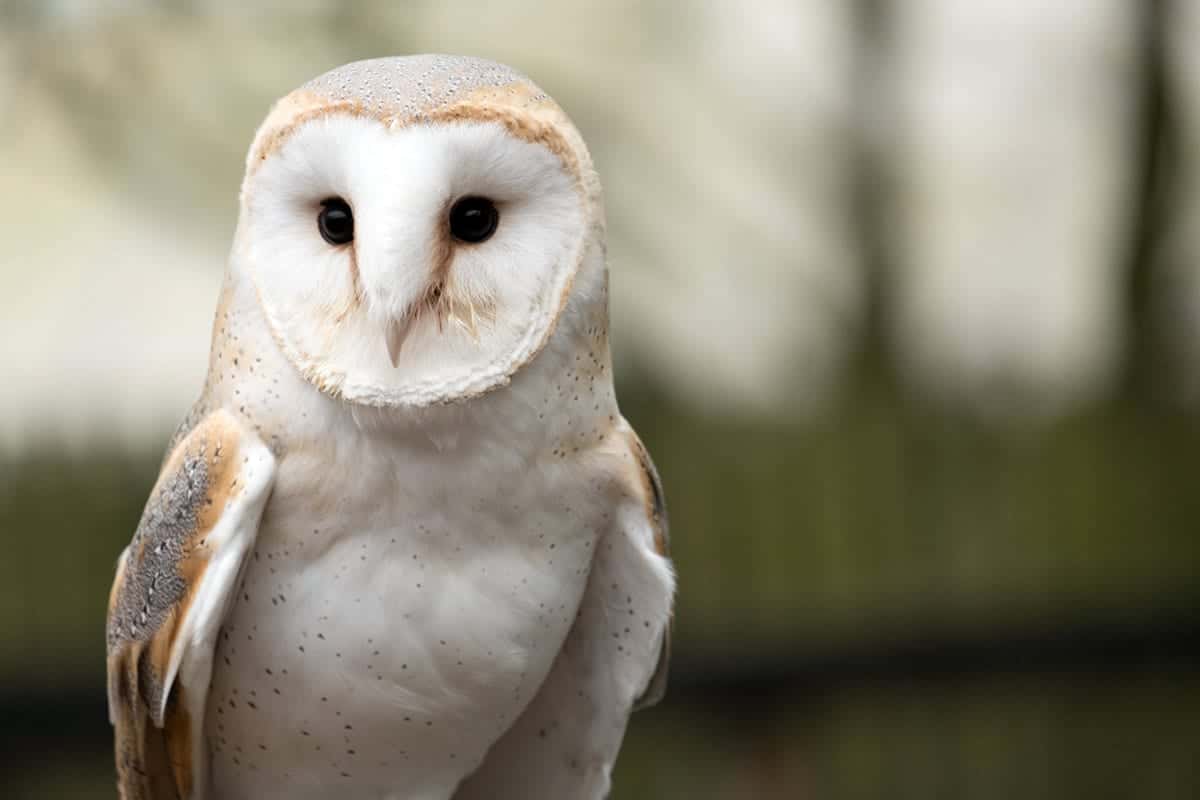
In that tradition, the Barred Owl is not a death omen or a wisdom symbol. It’s a guide and an ally, using its natural voice as cover for human survival. That’s a different category entirely. It’s a historical meaning, grounded in documented practice rather than mythological projection, and it places the owl squarely on the side of the people trying to get somewhere safe.
Many people encounter owl symbolism during a period of transition. If that resonates, the Underground Railroad reading is worth sitting with: the owl as the one who tells you when to move.
What Do Owl Behavioral Facts Reveal About Its Symbolic Meanings?
The symbolic projections attached to owls are not random. The biology earned them.
According to the Cornell Lab of Ornithology’s Barred Owl overview, Barred Owls mate for life, maintain territories they reuse for years, and call year-round, including during breeding season and beyond. A Barred Owl you hear in February in western North Carolina is almost certainly the same bird you heard last October and will hear next summer. That kind of persistent, long-term presence in a single place is rare among birds. It makes the owl feel like it belongs to the landscape in a way that migratory birds do not.
The Owl Research Institute documents Barred Owl wild lifespans at around ten years on average, with some banding records exceeding twenty years. Twenty years of calling from the same woodlot, watching the same family in the house below. The idea of the owl as a long-term guardian is not a stretch. The biology supports it.
Barred Owl territories run roughly 85 to 365 hectares, according to field records compiled by the Missouri Department of Conservation. They are largely sedentary. They share space with human communities for extended periods, calling conspicuously at night from branches close to yards and roads. A 2018 breeding survey by the Cornell Lab found Barred Owls resident across nearly all forested habitat east of the Rockies, including suburban woodlots and city parks. They are far more present than most people realize, which is part of why an encounter feels significant: you didn’t know it had been there all along.
And one fact worth correcting before we continue. Owls can rotate their heads roughly 270 degrees, not 360 as popular lore claims. They have 14 cervical vertebrae, twice the human count, which allows that range. Still genuinely remarkable. But not a full rotation, and the exaggeration in the folk claim should make us careful about larger claims too.
What Does It Mean When You See an Owl During the Day?
Daytime owl sightings are not rare in the way people assume. Barred Owls call and move during daylight with some regularity, especially in overcast conditions or during breeding season in late winter. The biological explanation is available: the bird was roosting, was disturbed, was responding to another owl’s call.
But across the traditions that treat owl encounters as significant, daytime sightings consistently carry amplified weight. The logic is structural. The owl has crossed from its natural domain into yours. It belongs to the dark and the quiet; finding it in full light feels like a crossing of registers, a thing out of its element, which is exactly how traditions describe a message arriving from outside ordinary experience.
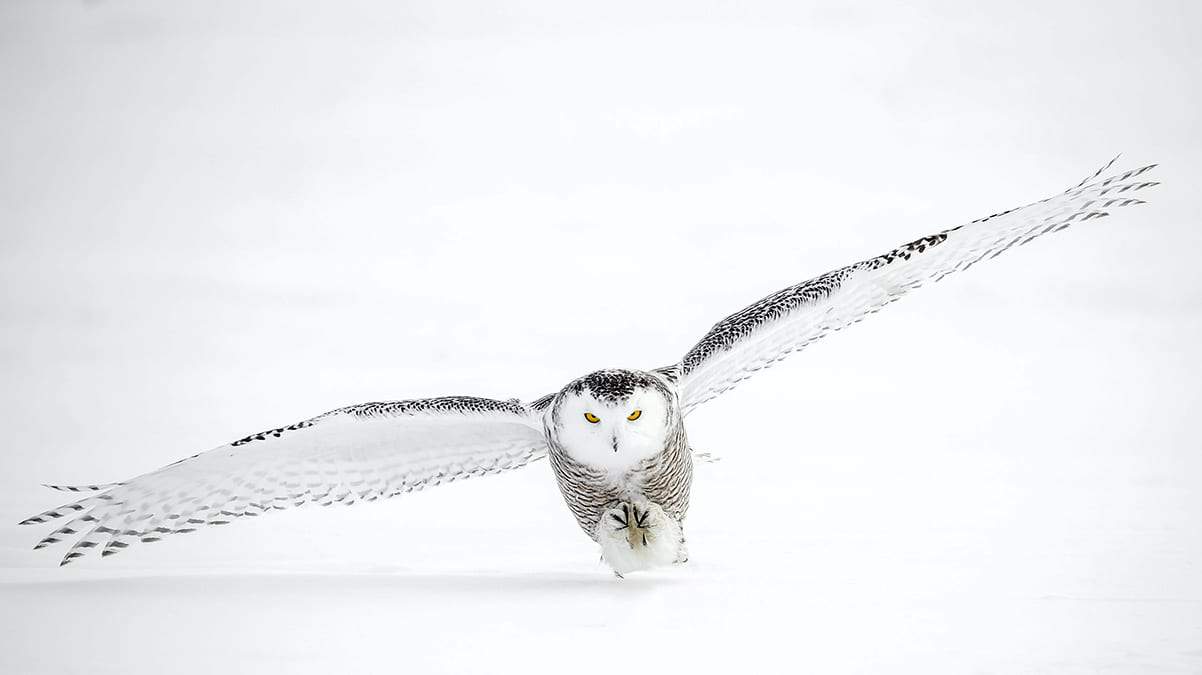
In Cherokee readings documented by Mooney, the owl appearing at an unexpected time, midday, near a home, in a place where owls don’t normally show themselves, heightens the sense that something is being communicated rather than simply occurring. The Cherokee framework treats the anomaly as part of the signal. If you asked for a sign and this is what came, take it seriously. That’s not my instruction; it’s the consistent structure of how these traditions interpret the unusual appearance.
I read daytime owl encounters as worth sitting with precisely because they’re unexpected. Not because I think the universe arranged them, but because attention tends to be sharper when something disrupts pattern. What that attention finds is usually something you already knew.
What Does It Mean When You Hear an Owl Hooting at Night?
Hearing an owl is a different encounter from seeing one. The source is hidden. You receive the call but not the bird. That distinction matters across traditions, and I don’t think it gets enough attention in most symbolism articles.
In Cherokee oral tradition, as documented in Mooney’s 1900 collection, owl calls bring news of events at a distance, things happening elsewhere, changes approaching. The call is a transmission. You don’t need to see the sender. In that framework, a Barred Owl calling from the dark tree line behind your house isn’t asking you to look for it; it’s telling you something is in motion.
In the Ozark folk tradition compiled by Vance Randolph in Ozark Magic and Folklore (1947), repeated owl hooting at night near a house was read as a weather sign or a misfortune warning. The number of calls, the direction, the hour, all of it was parsed. The tradition was watching for information in exactly the way the Cherokee tradition was, though the interpretive framework was different.
And then there’s the Barred Owl’s specific call, the eight-note “who cooks for you, who cooks for you all?” that carries a quarter mile through bare winter trees. That call, used as a coded signal on the Underground Railroad, means the same vocalization carries at least three distinct traditional meanings depending on who is listening: Cherokee news-bird, Appalachian weather-sign, signal of safe passage. You are not making this up when you stop and attend to it. Many people have found meaning in that sound across a long span of time.
What Is the Owl’s Meaning as a Spirit Animal or Totem?
What Does It Mean to Dream About an Owl?
- An owl watching you silently. In both Lenape and Greek frameworks, this reads as attention being paid. Worth asking what it might be seeing that you aren’t.
- An owl attacking or striking. More disruptive readings across traditions, sometimes associated with a warning that something has been ignored too long. Cherokee frameworks tend to read aggressive owl behavior as a more urgent signal.
- An owl delivering or carrying something. Messenger role, most clearly in Plains traditions. The content of what it carries matters.
- An owl that is white. See the section below. The color shifts the reading in almost every tradition.
What Does a White Owl Symbolize Compared to Other Owls?
What Common Misconceptions Distort Owl Symbolism Today?
Is Seeing an Owl a Bad Omen or a Good Sign?
Frequently Asked Questions
Is it rare to see an owl, and does rarity affect its meaning?
Rarer in behavior than in population. The Cornell Lab of Ornithology documents Barred Owls as year-round residents across nearly all forested habitat east of the Rockies, including suburban woodlots. Most owl encounters feel rare because owls are quiet and well-camouflaged, not because they’re actually scarce. Several traditions assign greater symbolic weight to encounters that break pattern: an owl seen in daylight, at close range, or more than once in a short period. Rarity of behavior matters more than rarity of species.
What does it mean when an owl flies in front of your car at night?
Biologically, owls hunting along road edges at night are struck by cars with some regularity. Roadsides concentrate small mammals, and the owl doesn’t register a moving vehicle as a threat. The practical explanation is available. In symbolic terms, an owl crossing your path directly has been read across traditions as a threshold marker: something you are passing through, a change of direction either behind you or immediately ahead. The Ozark folk tradition documented by Randolph in 1947 read a bird crossing one’s path at night as a signal demanding attention to what was coming.
What does it mean when an owl lands near you or stares at you?
The eye contact is the part that matters. A wild animal that should move away from you, that instead holds still and looks directly at you, has crossed a behavioral threshold that the human nervous system registers as significant, because it is unusual. In Lenape guardian-spirit tradition, an animal approaching without fear is demonstrating a relationship. In Cherokee tradition, an owl that stays near a person and regards them has something to communicate. Sitting quietly with the moment, rather than explaining it away immediately, tends to produce something worth having.
Does the type of owl change the spiritual meaning?
I think it does, and I’m not sure enough sources say so directly. A Barred Owl and a Great Horned Owl are very different animals. The Barred Owl is the “hoot owl” of eastern American folk tradition, the one Harriet Tubman used as a signal, the one Vance Randolph’s informants in the Ozarks were hearing. The Great Horned Owl is larger, more aggressive, and carries different weight in several traditions; some Plains nations specifically associated it with warrior power rather than the messenger or guardian role. The Screech Owl appears in Cherokee tradition as a distinct figure. Species identification matters if you want to be precise about which tradition’s reading applies.
What does it mean when an owl visits your yard or property repeatedly?
Repeated visits from the same owl almost certainly mean the bird holds territory that includes your yard. Barred Owls maintain territories for years, so “your owl” may have been there longer than you have. The Lenape framework of the long-term guardian figure applies here more naturally than the warning or omen frameworks, which tend to respond to sudden or anomalous appearances. An owl present across multiple seasons is a different encounter than one that shows up once during a crisis. The bird may be offering something less dramatic and more reliable than a one-time message.
Are owl feathers spiritually significant, and is it legal to keep them?
On legality first: in the United States, it is illegal to possess the feathers of any native owl species under the Migratory Bird Treaty Act of 1918, regardless of how you came by them. This applies even to feathers found on the ground. There is an exception for enrolled members of federally recognized tribes, but that exception does not extend to non-Native people. Photograph them and leave them. As for symbolic significance: in Lakota and related Plains traditions, owl feathers carried protective power associated with the warrior vision-role. Their use was specific to ceremonial context, not casual display.
What does it mean when an owl hoots three times?
I don’t have a confident answer here. The folk record on counted hoots is thin and inconsistent. Vance Randolph’s Ozark Magic and Folklore records various numerical readings of owl calls, but they vary by community and informant and don’t cohere into a single tradition. The Cherokee framework treats the call as news-transmission but doesn’t, in the documented sources I’ve read, assign specific meaning to the number of vocalizations. If you heard three hoots and it struck you as significant, the significance lives in the moment and your state of mind, not in a universal count-based code the tradition has actually agreed on.
Do owls symbolize death in the Bible or Christian tradition?
Owls appear in the Hebrew Bible in contexts of desolation and ruin. Isaiah 34 and Zephaniah 2 both use owls as inhabitants of abandoned cities, creatures of waste places. In the Christian tradition that developed from these texts, owls generally inherited the “waste place” association rather than becoming active death omens. The strong death-omen reading of owls in Western European Christianity seems to come less from biblical text and more from the strix tradition in Roman literature, filtered through medieval witchcraft associations. What most people call “the Christian reading” of owls is actually partly Roman and medieval rather than strictly scriptural.
What does it mean when two owls appear together?
Barred Owls are monogamous and maintain territories as pairs, so two owls together may simply be a mated pair, particularly in late winter, when courtship calls and duetting are common. The National Audubon Society notes that Barred Owl pairs call in duets during courtship, producing overlapping calls that can sound like a conversation. In Appalachian folk tradition, two owls calling near a house at night was sometimes read as a dialogue between two presences. I read paired owls as a reminder that the owl’s world and yours share the same darkness. That’s enough.
How should someone respond after a significant owl encounter?
Write it down before you do anything else. Date, time, location, what the owl did, what you were thinking about before it appeared. Not because the journal entry will tell you what it meant, but because recording it is the beginning of paying attention rather than just reacting. After that: sit with it. The traditions that take owl encounters seriously, Lenape guardian-spirit belief, Cherokee messenger tradition, the Ozark practice of reading calls as information, all assume the encounter is the beginning of a longer attentiveness, not a one-time event with an immediate answer. Once can be anything. A pattern is a conversation.
Sources
- Cornell Lab of Ornithology, “Barred Owl – All About Birds” (accessed 2024)
- National Audubon Society, “10 Fun Facts About the Barred Owl” (accessed 2024)
- Buffalo Bill Center of the West, “Native Americans and Owls” (2018)
- International Owl Center, “Owl Myths and FAQ” (accessed 2024)
- Owl Research Institute, “Barred Owl” (accessed 2024)
- Terrain.org, contextual reference for Appalachian and Ozark folk tradition (accessed 2024)
- Missouri Department of Conservation, “Barred Owl” field guide (accessed 2024)
- Nature for My Soul, Barred Owl natural history notes (2014)
- James Mooney, Myths of the Cherokee (Bureau of American Ethnology, 1900)
- James R. Walker, Lakota Belief and Ritual, ed. DeMallie and Jahner (University of Nebraska Press, 1980)
- Frank Speck, The Delaware Indians (1931)
- Boria Sax, The Mythical Zoo (ABC-CLIO, 2001)
- Vance Randolph, Ozark Magic and Folklore (Columbia University Press, 1947)
- Ovid, Fasti 6 (c. 8 CE)
- Aristophanes, Birds (414 BCE)
- IUCN Red List, Strix varia assessment (2016)

Loved this so much I touched an owl today and he was sun bathing!
The owl is in fact a symbolism of the Luciferians and Freemasons.
Beautifully resonated, great article, very informative, nothing in life feels like a coincidence this is exactly what I needed to read ❤
Are their still interpreters of dreams or interpreters to help or see And give someone wanting to know more into our pathways if may feel something’s stick out more and because of our beliefs it is very purposely and could be spirits and meaningful and you/simply know their is something in passages read somewhere that help imprint or enlighten the message that’s not being clear ( I may not have right words and could have asked in less words)