
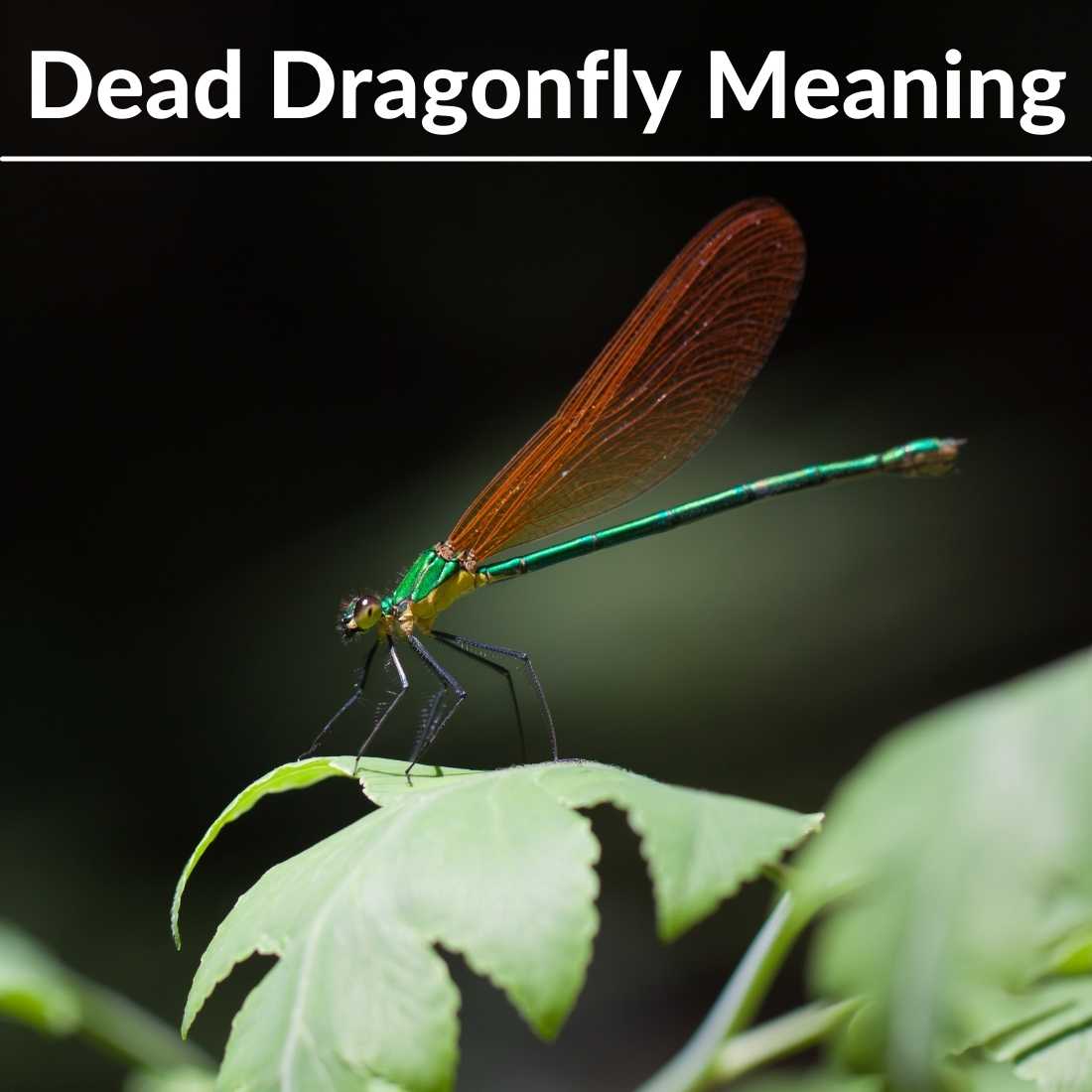
You found it motionless on the porch, that small red body catching light like it shouldn’t be still. In Japan’s Nihon Shoki, written in 720 CE, a dead dragonfly marked the season’s turning point. But whether it died before that threshold or after it shifts the whole reading.
Key Takeaways
- Across most traditions, a dead dragonfly marks a threshold: something is ending, or has ended.
- In Swedish and wider northern European rural folklore, dragonflies were soul-weighers and devil’s servants; finding one dead was read as a warning that judgment or reckoning was near.
- Japanese tradition reads the dead dragonfly as seasonal closure, the moment summer’s fullness tips and goes still.
- In contemporary North American grief practice, a dragonfly appearing after a death and then found dead is read as a soul’s departure confirmed.
- Location matters: inside the house, on the doorstep, and in the garden each carry different weight.
What Does It Mean When You Find a Dead Dragonfly?
The short answer: a threshold. Something is ending, has ended, or is crossing over. That reading holds whether you come at it from Japanese haiku, Swedish village lore, or the informal grief tradition that has gathered around dragonfly meaning death in contemporary North America. The traditions disagree on whether that ending is something to fear or something to accept, but they agree on the basic shape.
I’m Richard Alois. I write about animal symbolism from a cabin in Black Mountain, North Carolina, and I try to tell you what the actual record says rather than what gets repeated. With dragonflies, the record is genuinely interesting, and genuinely split. The fearful readings and the consoling ones come from different places, and knowing which is which helps you figure out which belongs to your situation.

You are not making this up. The instinct to read meaning into what you found connects you to a long line of people who did the same thing, and they weren’t foolish for it.
What Is the Spiritual Meaning of a Dead Dragonfly?
Two camps. They don’t fully reconcile, and I’d rather tell you that plainly than smooth it over.
The first, rooted in contemporary North American spiritual practice and shaped by Japanese seasonal imagery, reads a dead dragonfly as completed transition. A soul released, a chapter closed. The red dragonfly carries this weight most clearly, arriving in autumn as visible proof that summer’s life force has peaked and is turning. Death here is part of the cycle. Not a punishment.

The second camp is northern European, and it’s darker. In Swedish, Welsh, Danish, and Portuguese rural tradition, the dragonfly was not a gentle creature. It had names: devil’s needle, eye poker, horse stinger, snake’s servant, hobgoblin fly. Folklore researcher Icy Sedgwick documents these vernacular names across Wales, Sweden, Denmark, and Portugal, and they tell you everything about how pre-industrial European villages understood this insect. It wasn’t a spirit guide. It was an agent of something threatening.
I’ll say plainly which reading I find more useful: the northern European one is historically richer, but the Japanese seasonal reading is more accurate to what most people who find a dead dragonfly are actually feeling. They sense an ending. They’re right to name it.
What Does Japanese Tradition Say About a Dead Dragonfly?
Japan was once called Akitsushima, the dragonfly island. That name comes from the Nihon Shoki, compiled in 720 CE, and it tells you how deep the dragonfly ran in the culture. In haiku and seasonal poetry, the red dragonfly marks the turn into autumn, the exact moment when summer’s fullness tips toward decline. Basho and his school returned to this image the way certain writers return to the first frost.
A dead dragonfly in that tradition is not an intrusion. It’s a confirmation. The season that brought the dragonfly has ended, and the dragonfly’s stillness is the evidence. Some contemporary writers influenced by Japanese imagery go further, reading a dragonfly found dead near a place of grief as a sign that a soul’s transit is complete.

I don’t speak for Japanese tradition. But I find the seasonal logic genuinely useful, because it doesn’t ask you to fear what you found. It asks you to acknowledge that something real has ended. That’s a reasonable thing to ask.
What Does Northern European Folklore Say About a Dead Dragonfly?
Oh, the names. Devil’s needle. Eye poker. Horse stinger. Snake’s servant. Hobgoblin fly. These aren’t metaphors added later; they’re what ordinary people in Wales, Sweden, Denmark, and Portugal actually called this insect, and they tell you exactly how much fear the creature carried in that world.
In Swedish rural tradition specifically, dragonflies were said to serve trolls and could sew shut the mouths and eyes of enemies. A separate strand of Swedish folklore had them hovering to weigh souls, particularly those of sinners. The dragonfly as judge. That’s a very different creature from the Japanese symbol of courage and seasonal beauty.
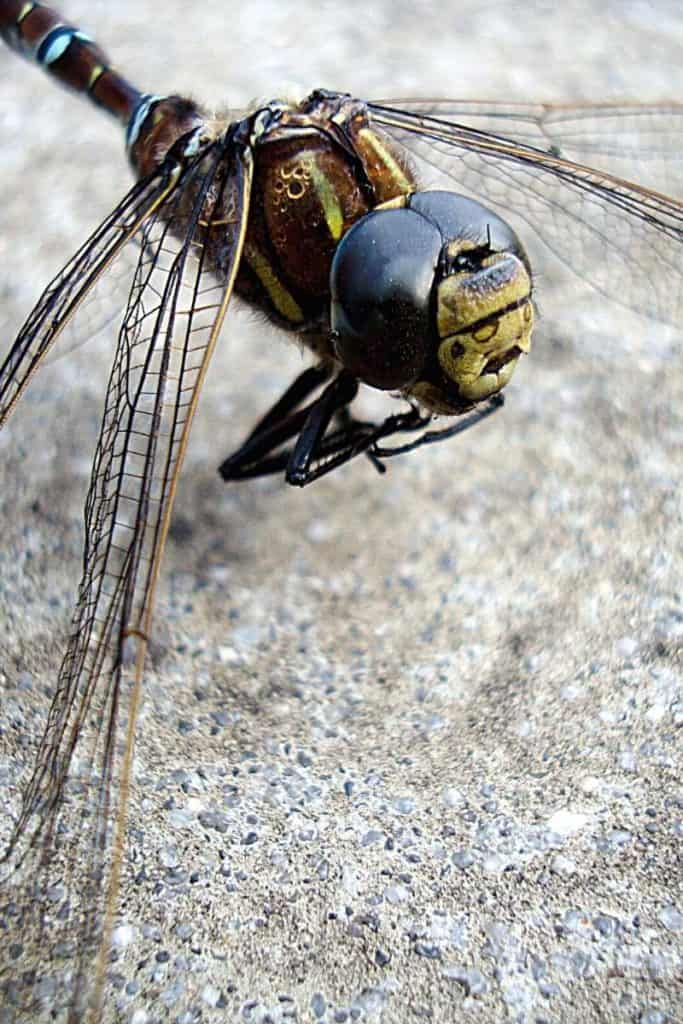
So what does a dead one mean in that frame? The soul-weigher has stopped. The judgment is either finished or the reckoning is coming. I’ve read three separate interpretations of the dead dragonfly as northern European omen and don’t fully trust any of them, because the original folklore isn’t specifically about dead dragonflies. It’s about live ones that were threatening. The inversion into omen territory is a later gloss. Worth knowing, but hold it loosely.
What Does It Mean When a Dead Dragonfly Appears In or Around Your Home?
Location changes the reading. Not dramatically, but enough to matter.
Inside the house: In most folk traditions, an insect or bird that crosses the threshold uninvited carries a more personal message than one found in the yard. A dead dragonfly inside the house is read in contemporary grief practice as something meant specifically for you; a soul checking in before departing, or a confirmation entering your private space. If someone close to you has recently died, this reading will feel true whether or not you can prove it.
On the doorstep or porch: The doorstep is threshold territory across dozens of traditions, from Appalachian folk belief to Irish rural custom. Something on the doorstep is between worlds, not yet inside your life, not entirely outside it. A dead dragonfly on the step is a message in transit. What it’s saying depends on what’s happening in your life right now.
In the garden: This is the least charged location. Dragonflies live and die outdoors; finding one in a garden is as natural as finding a fallen leaf. The seasonal reading fits cleanly here. The cycle is turning, something is completing itself, and you happened to witness the evidence.
What Does It Mean When a Dead Dragonfly Appears After Someone Dies?
This is the question with the highest stakes, and I want to answer it carefully.
According to Miles Funeral Home’s essay on death and dragonflies, the association between dragonflies and the souls of the deceased is well-documented in contemporary North American grief culture, particularly in hospice settings and bereavement communities. The dragonfly appears, and then it disappears, or it dies, and grieving people read this as the soul saying goodbye before going.
I am not a medium. I don’t believe dragonflies carry messages from the dead in any literal sense. But I do believe the mind reaches for images when language fails, and the dragonfly has become one of those images for a lot of people. My grandmother Theresa kept a leather notebook of animal lore from the Bavarian Forest, and what I’ve come to understand from reading it is that this kind of reaching is old and ordinary. People have always done it. The Japanese seasonal logic supports it from a different angle: the red dragonfly of autumn marks the moment fullness becomes ending. A dead dragonfly after a death is, at minimum, an image that fits the moment.
Whether it’s more than that is not mine to say.
There is no version of this that means you should be afraid.
What Should You Do After Finding a Dead Dragonfly?
A few concrete options, none of them requiring any particular belief system.
You can acknowledge it. Stop for a moment before you move the body. Say something, even to yourself. In Appalachian folk tradition, acknowledging an omen out loud was considered respectful and, practically speaking, completed the encounter rather than leaving it open. I find this useful regardless of what you believe about signs.
You can bury it or leave it. A small burial, even just placing it under a plant in the garden, is a reasonable gesture if the body is in a place that feels personal. If it’s on a path where it’ll be disturbed, moving it to a quieter spot costs nothing.
Some people keep the body. Dragonflies are among the most striking insects to preserve, and their iridescence survives drying surprisingly well. If you want to keep a specimen, the University of Puget Sound’s natural history collections program has practical guidance on Odonata preservation. The body has meaning beyond symbolism; it’s also a genuinely beautiful object.
And if someone you love has just died, and this is the dragonfly that showed up: you don’t have to do anything. You noticed it. That’s enough.
Frequently Asked Questions
Is finding a dead dragonfly bad luck?
Not by default. In Japanese seasonal tradition, a dead dragonfly marks the natural close of a life phase, something ending, not something cursed. In Swedish rural folklore, dragonflies were associated with the devil and soul-judgment, so a dead one carries heavier weight in that context. But most people who find one aren’t living inside Swedish vernacular tradition. If your gut says this is a sign of ending rather than a punishment, I’d trust that instinct. Endings aren’t the same as bad luck.
What does it mean if a dragonfly dies in your hand?
The folk record I’ve found doesn’t document this specific scenario well, which means most answers circulating elsewhere are invented. What I can offer: holding a dying animal is an intimate act. A death in your hands is a death you witnessed. In Japanese thought, bearing witness to a natural ending is a form of respect, not a curse. I’d sit with that rather than reach for an omen framework that doesn’t quite fit this situation.
Does the color of a dead dragonfly change its meaning?
For living dragonflies, yes, color carries real weight. The red dragonfly specifically marks the autumn threshold in the haiku tradition tied to Japan’s Akitsushima naming, and a dead red dragonfly would carry all of that seasonal finality. A blue or green one would read more softly. But I’ll be honest: color-specific meanings for dead dragonflies aren’t well-sourced anywhere I’ve found. The color matters more for living encounters than dead ones.
I want to be careful here because “Native American tradition” covers hundreds of distinct nations with different relationships to dragonfly symbolism. In Navajo tradition, dragonflies are associated with water and purity and appear in sandpainting. In some Pueblo traditions they’re connected to rain. I haven’t found specific documentation of dead-dragonfly omens in these traditions, and I won’t invent one. If you have a specific cultural connection, look for sources within that nation’s own scholarship rather than pan-indigenous generalizations.
Is a dead dragonfly a sign from a deceased loved one?
This interpretation has real roots in contemporary North American grief culture, particularly in hospice communities where dragonfly imagery has become a shorthand for the soul in transit. I’ve seen it bring genuine comfort to people in bereavement. What I can say honestly is that I don’t know whether it’s literally true, and I think you probably don’t need me to confirm it either way. If you found a dead dragonfly after a loss and it felt like a message, the feeling itself is worth taking seriously.
What does it mean to find multiple dead dragonflies in one place?
The biology first: dragonflies congregate at water sources and hunting grounds, and mass die-offs happen at the end of the season, particularly in autumn. Finding several near a pond or meadow edge in September or October is a natural event. But if the cluster is somewhere unexpected, your front step, your windowsill, a spot with no obvious ecological reason, the symbolic weight is harder to set aside. I’d read it as the same message, louder. Not more catastrophic. Louder.
Should I keep or dispose of a dead dragonfly I found?
Either is fine. If the body is intact and the iridescence is still visible, dragonflies preserve well; the wings hold their structure when dried flat. Some people keep them as memento mori objects, which has a long tradition in both European and Japanese material culture. If you’d rather not keep it, a small burial in the garden or returning it to a natural space is reasonable. There’s no tradition I’ve found that requires specific disposal. For preservation methods, the University of Puget Sound’s natural history collections program has practical guidance on Odonata specimens.
Sources
- Sweetgrass Farm Garden, Red Dragonfly Symbolism, Transformation, and Death
- Jamie Bourgeois, Dragonflies (2015)
- Reads by Red River Banks, Cultural Symbolism of Dragonflies
- British Dragonfly Society, Frequently Asked Questions
- Icy Sedgwick, Dragonfly Folklore
- Miles Funeral Home, Of Death and Dragonflies
- USC Scalar, Dragonfly and Butterfly (Animal Mourning project)




I found 2 small dragonfly s, beside one another, orange and black stripes in front of my car , wasn’t yhere b4, and a black cat crossed in front me ,layed down, starred at me, mean looking,. What’s all this mean??????
I would stay home for the day. or if I had to go out, I would say a spiritual prayer to thank the spirit guides for the message and ask for protection on your journey. I could also mean, there are changes in a relationship that you should be forewarned about. hope it was a good day for you.