You found a grasshopper in your house and went straight to Google: what does this mean? Across most traditions, it’s a good sign: forward movement, a nudge toward a choice you’ve been stuck on. What shifts the reading is where it showed up, what color it was, and what’s already happening in your life. There’s a practical way to handle it and continue with your day.
Key Takeaways
- A grasshopper inside your home reads as a positive omen in the majority of cultural traditions: luck, opportunity, forward movement.
- The room matters. Kitchen points toward abundance, bedroom toward something more personal, front door toward a change coming in.
- Chinese folk belief, Japanese tradition, and several Hopi and Pueblo oral traditions all treat the indoor grasshopper as auspicious.
- The biology is the metaphor: a grasshopper can only jump forward. It cannot reverse its leap.
- A black grasshopper carries a modified reading, not a bad one. And true black grasshoppers are rarer than most people realize.
What Does It Mean When a Grasshopper Comes Into Your House?
Something is moving. That’s the short version, and I mean it seriously. Like a grasshopper spiritual meaning suggests, movement often carries deeper significance.
In folk traditions from East Asia to the American Southwest, a grasshopper crossing a threshold signals that change is arriving, and the change skews good. I say “skews” deliberately. I’m not going to promise you a windfall. But I’ve read enough of this material to say that the dread-omen reading is a minority position, and a thin one at that.
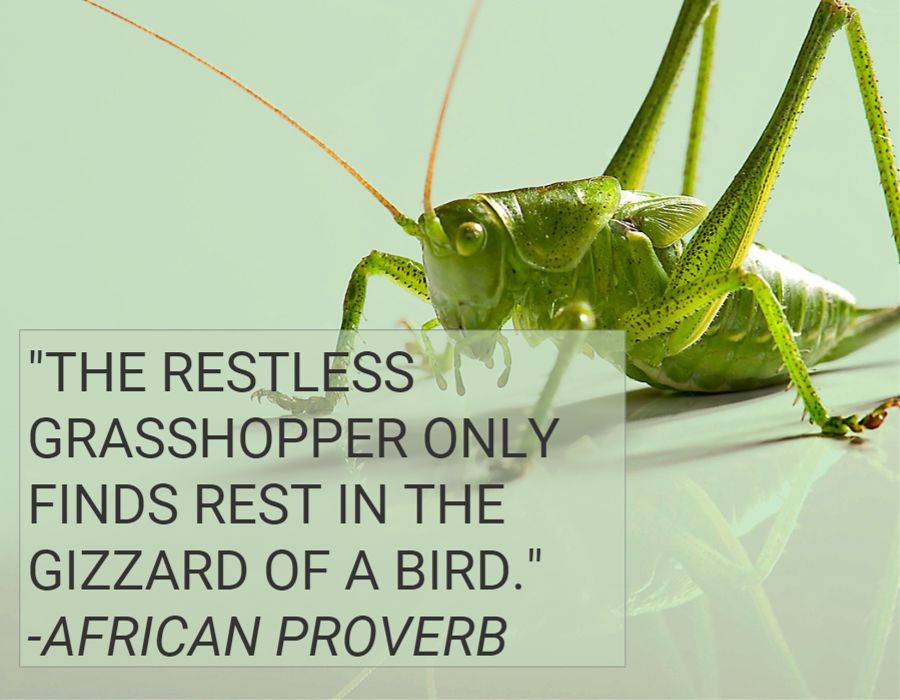
The English word “grasshopper” comes from the Old English gærshoppa, a compound of “grass” and “hopper.” The creature is defined entirely by where it goes, not where it came from. That’s not accidental in terms of what humans have made of it symbolically. The grasshopper doesn’t retrace its path. It commits.
So if one just landed in your kitchen or climbed up your doorframe, you are not making this up by paying attention. The noticing is real.
Is a Grasshopper Inside Your Home a Good or Bad Omen?
Good. Mostly, with one narrow exception worth naming.
The exception is the locust-adjacent reading. In the biblical tradition, as documented in the Biblical Cyclopaedia’s entry on locusts, grasshopper-type insects appear as instruments of destruction: the eighth plague in Exodus, devouring crops, stripping fields. But that reading is about swarms and scale. One grasshopper sitting on your windowsill is not a plague. The symbolic weight of “locust” doesn’t transfer to the solitary creature that just crossed your floor.
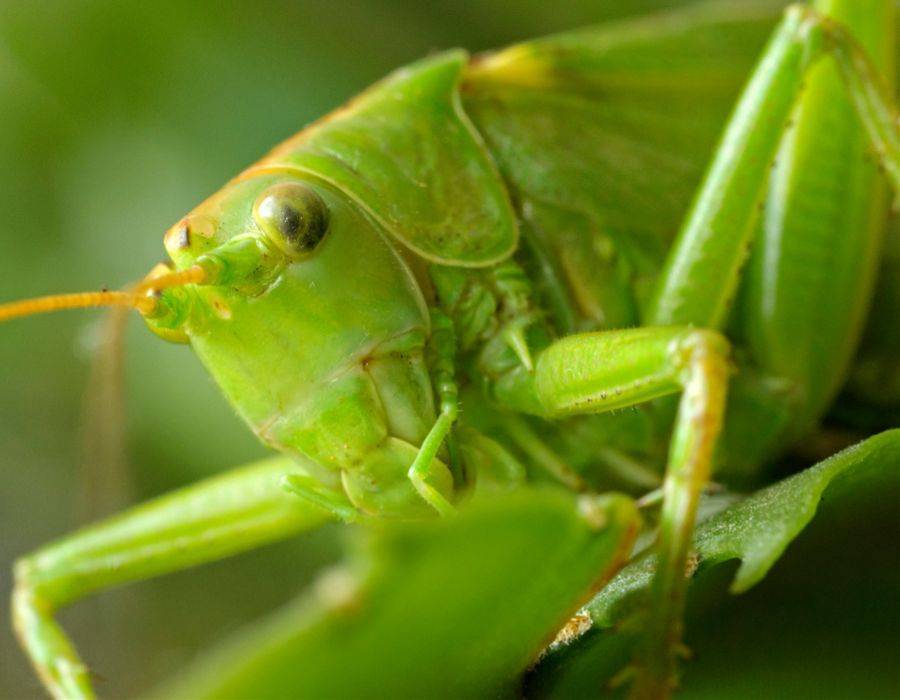
Everywhere else I’ve looked, the indoor grasshopper reads as auspicious. In Chinese folk belief, the grasshopper is associated with good luck and fertility; during the Tang Dynasty, people kept them in small cages specifically because their presence was thought to bring abundance into a home. Lafcadio Hearn, who spent years documenting Japanese folk culture in the late 19th century, noted that singing insects, including the kirigirisu (a cricket-grasshopper type), were kept indoors as lucky companions, their sound a domestic blessing.
There is no version of this that means you should be afraid.
What Do Different Cultural Traditions Say About a Grasshopper in the House?
The Native Languages of the Americas archive records grasshopper figures in the oral traditions of several nations, including Hopi and Pueblo peoples, as figures of intuition and leaping faith: beings that move forward on instinct rather than calculation. The Hopi Kokopelli figure, associated with fertility and music, has insect connections, and the grasshopper folds into that cluster of meaning. I am not Hopi, and I won’t pretend to speak to the full depth of those traditions. But the signal across those sources is forward movement and trust, not warning.
In Greek moral tradition, the grasshopper appears most famously in Aesop’s fable of the grasshopper and the ant: the grasshopper sings through summer while the ant labors, and comes to ruin in winter. That reading is about timing and preparation, not the creature’s nature. And the Greek word at the root, akris, carries no inherent darkness.
In Chinese feng shui practice, a grasshopper entering a home from the east is considered especially auspicious, tied to new beginnings and fresh energy. The base association is positive, whatever direction it came from.
And in Hmong folklore, according to the Hmong and Native Americans cultural archive, the grasshopper appears in stories involving transformation and the crossing of difficult social thresholds. The creature moves into places it wasn’t expected. That’s the pattern across traditions.
What Does Vastu Shastra Say About a Grasshopper Entering Your Home?
Vastu Shastra, the traditional Indian system of spatial arrangement that predates modern feng shui comparisons by centuries, reads animal visitors through direction and elemental energy. A grasshopper entering from the north or northeast, the directions associated with wealth and spiritual growth in classical Vastu texts, reads as a sign of incoming prosperity. The northeast corner is the most sacred quadrant of a home in Vastu practice; a living creature entering from that direction isn’t treated as intrusion but as confirmation.
A grasshopper coming in from the south or southwest gets a more neutral reading. Vastu practitioners documented in the USC Folklore archive on Indian home rituals suggest observing without anxiety. The creature arrived, and your attention to it is the meaningful act.
I don’t have training in Vastu practice, and I want to be clear about that. But the directional framework gives you a more specific answer than “it means good luck.” If you tracked which wall or window the grasshopper came through, that detail actually matters in this system.
Does It Matter Where in Your House the Grasshopper Appeared?
Yes. Or rather, the location question is worth sitting with, because different rooms carry different symbolic weight across most folk traditions.
Front door or threshold: A grasshopper at the door is the most direct version of the “something is arriving” reading. The threshold is already a symbolic boundary in dozens of traditions. The creature appearing there reads as change coming in, or an invitation to step toward something you’ve been holding back on.
Kitchen: In folk belief across cultures, the kitchen is the center of domestic abundance. A grasshopper in the kitchen reads as a good sign for the household: for food, warmth, finances, the material ground of daily life.
Bedroom: This is the more personal reading. Relationships, rest, the interior life. A grasshopper in the bedroom is sometimes read as a prompt around an intimate decision, something you’ve been turning over in the quiet hours that you haven’t acted on yet.
If you want to go further on what grasshopper encounters mean beyond the house, the full grasshopper symbolism guide covers the broader tradition in more depth.
What Is the Spiritual Message a Grasshopper Might Be Bringing You Right Now?
Here’s what I actually think, and I’ll say it plainly.
The grasshopper’s biology is the message. It can only jump forward. A grasshopper’s hind legs are built for a single direction; the creature cannot reverse its leap. According to data from the University of Michigan’s Animal Diversity Web, a grasshopper can jump approximately ten times its own body length in a single bound. Scale that to a human being and you’re talking about fifty feet from a standing start.
The symbol maps directly onto that fact. You’re not being told what to do. You’re being handed a mirror of what forward movement looks like when it commits fully, without hedging.
Theresa’s notebook, which my grandmother kept from her own grandmother in the Bavarian Forest and which sits on my desk now, doesn’t mention grasshoppers specifically. But the posture it asks for, toward any animal that shows up unexpectedly, is the same: pay attention without demanding certainty. The folk tradition around grasshoppers consistently describes them as creatures of instinct and timing. They wait. And then they go completely.
If you have a decision sitting unfinished, a conversation you’ve delayed, a step you’ve been circling, I’d read this as a nudge, not a command.
What Should You Do After a Grasshopper Enters Your Home?
The practical part first. If the grasshopper is still there, catch it in a glass, slide a piece of paper under the rim, and release it outside. Do it facing the direction it entered from, if you remember. This isn’t a superstitious instruction. It’s just the right thing to do for the animal. Grasshoppers need sun, vegetation, open air. They don’t belong inside.
The reflective part: write down where it appeared and what you were thinking about when you found it. Not because I believe the universe sends memos, but because the mind reaches for animal encounters in moments of personal uncertainty, and the reaching itself tells you something. What question were you sitting with? That’s probably what this is about.
Some people light a candle after an encounter like this, or say a brief word of acknowledgment. I don’t have a spiritual practice that requires it, but I understand why people do. It marks the moment as one you paid attention to. That’s the point.
If you’re looking for practical help managing grasshoppers in your yard rather than interpreting a single indoor visitor, that’s a different question, and one better answered by Iowa State University Extension’s guide to grasshoppers in the home garden, which covers population management without any folk interpretation attached.
Frequently Asked Questions
Is it bad luck to kill a grasshopper that comes into your house?
In most folk traditions I’ve encountered, yes. Killing a creature that entered your home voluntarily reads as at minimum disrespectful, and in some traditions actively unlucky. Chinese folk belief holds that the grasshopper brings luck into a home; killing the carrier negates the message. The practical answer is always release, not harm. Catch it in a glass, take it outside. That’s the right move across the board, symbolically and practically.
What does it mean if a grasshopper keeps coming back to my home?
Repetition in folk traditions reads as emphasis. A single grasshopper is a nudge; a recurring one is a harder knock. I’d ask what decision or situation keeps recurring in your own life at the same time. The creature isn’t sending you messages, but your attention to a repeating pattern, in the animal world or anywhere else, tends to point at something you already know and haven’t acted on. Pay attention to the timing.
Can a grasshopper in the house be a sign from a deceased loved one?
I don’t personally believe animals carry messages from the dead. I want to be honest about that. What I do think is that grief makes us attentive in ways we aren’t otherwise, and that attentiveness is real and worth honoring. If a grasshopper appeared shortly after a loss and it felt significant, that feeling is not nothing. Folk tradition in many cultures holds that the living world responds to the attention of the grieving. I won’t argue with that framing, even if I hold it differently.
What does it mean if a grasshopper jumps on me while inside my house?
Direct contact sharpens the reading. In Ted Andrews’ Animal Speak (Llewellyn Publications, 1993), which I use as a reference point rather than a final authority, direct contact with an animal is interpreted as the strongest version of the encounter: the signal is specifically for you, beyond being merely for the space. I find that framing coherent. A grasshopper landing on your body, inside your home, is the version of this encounter that deserves your full attention.
Does the season affect the meaning of a grasshopper entering your home?
Grasshoppers are warm-weather insects, active from late spring through early fall in most of North America and Europe. A grasshopper indoors in July is biologically ordinary; one showing up in November is genuinely unusual. Folk readings tend to scale with unusualness: the more out-of-place the encounter, the stronger the signal. A winter grasshopper would be taken more seriously than a summer one. I don’t have a confident source for that specific calibration, but it follows the internal logic of the tradition.
What’s the difference in meaning between a grasshopper and a cricket found indoors?
Crickets and grasshoppers are related but their folk meanings diverge. Crickets, across most traditions, belong specifically to the home and domestic luck. They were kept in Chinese households for good fortune, and Appalachian mountain tradition holds that a cricket in the house means money is coming. The grasshopper carries more of an outward, forward-moving energy. A cricket inside is a blessing for the household as it is. A grasshopper inside is a prompt toward what’s next. Both are positive; the direction of the meaning differs.
Are there Biblical or Quranic interpretations of a grasshopper entering a home?
The biblical tradition treats locusts and grasshoppers primarily as agents of judgment at scale: the plagues in Exodus, the locust army in Joel. I’ve found no specific tradition in biblical text about a single grasshopper entering a home as an omen in either direction. The Quranic tradition similarly addresses locusts as a sign sent to Pharaoh’s people, not as a household symbol. In both cases, the single indoor grasshopper sits outside the scriptural frame. Folk traditions that developed within Christian or Muslim cultures often built their own animal-omen systems separately from scripture, and those are the traditions where the indoor visit carries meaning.
Sources
- Etymology Explorer: “grasshopper”
- Online Etymology Dictionary: “grasshopper”
- Biblical Cyclopaedia: Locust entry
- Native Languages of the Americas: Grasshopper Legends
- Hmong and Native Americans: The Grasshopper and the Mother-in-Law Hummingbird
- USC Folklore Archive: Indian Home Rituals and Customs Related to Luck
- Aesop’s Fables (Project Gutenberg edition)
- MyMythos: Grasshopper Archetype
- Ted Andrews, Animal Speak (Llewellyn Publications, 1993)
- University of Michigan Animal Diversity Web, Acrididae (grasshopper family) behavioral data